
 Khmer
Khmer
By: MANG Valy, AN Raksmey, SREI Sambunnarong
Supported By: UNESCO Participant Programme 2024-2025
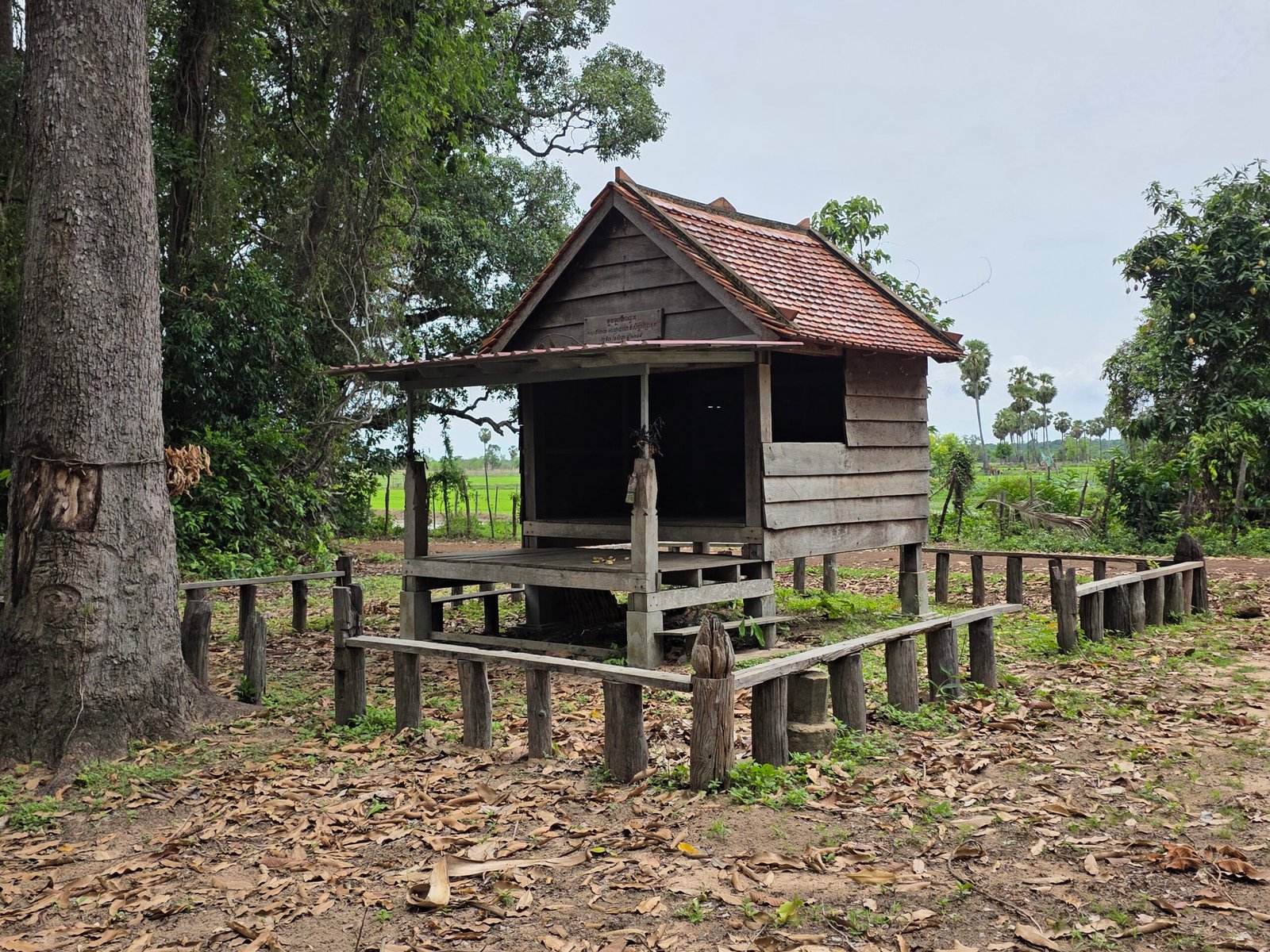
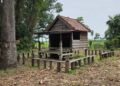
The area surrounding the Sambor Prei Kuk temple complex is characterized by pervasive animistic practices, with the veneration of Neak Ta (ancestral or tutelary spirits of the land) being the most prominent aspect. These non-human entities, also respectfully referred to as Lok Ta, are believed to represent the communal power of the locality and are essential for ensuring a plentiful and successful rice harvest. Reflecting this agricultural function, shrines for key Neak Ta are typically small huts (khtom) situated near or facing rice fields.
Paul Mus (1934: 367-410) posits that the reverence for Neak Ta is an act of venerating the power of the earth, and that Neak Ta are also ancestors who have died, as their remains have dissolved into the soil. He further explains that the stone placed in the hut is the Neak Ta stone. This stone is set up to give form to the deity and facilitate communication with it during various rituals. If water is poured over the stone during a ceremony, it symbolically represents the irrigation of the entire earth’s surface (ibid.). In contrast, Ang Choulean (2000) explains that Neak Ta embodies both people and the land; specifically, they are the ancestors who cleared the forest to establish the village, leading to agricultural yields and allowing others to continuously benefit from that land. The objects representing Neak Ta include stones, termite mounds, stupas, or ruined ancient temples, among others. All these objects symbolize the village territory (the land) from which people have the right to extract agricultural produce. Both Indian and Khmer traditions, along with countless other nationalities, regard natural objects like stones or termite mounds, which represent the Neak Ta, as phallic symbols (the male element). In some Neak Ta huts, a mortar with a hole in the bottom and a new pestle are placed; these two objects may represent the original concept of sexual union, which is a potent symbol for “agricultural abundance” (see Sok Chan Thyda 2013: 47-60). Over time, they simply began to place an intact mortar and a new pestle, directly associating them with the symbol of abundance. This evidence clearly suggests that the belief in Neak Ta is inseparable from the concept of agricultural abundance, with rice being the most important crop in the daily lives of the Khmer people.
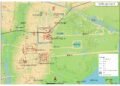
Generally, a village (or district) may have multiple Neak Ta because their function and role are intrinsically linked to the rice fields. Therefore, a village with large rice fields may have more than one Neak Ta. For example, focusing solely on Sambor village, there are up to 15 Neak Ta. The Neak Ta in Sambor village include: Neak Ta Vat (within the compound of Sambor Pagoda, with a shrine east of the main Vihara); Neak Ta Ach Chhke (located in the northeast corner outside the Sambor Pagoda fence); Neak Ta Yeay Leak (a female Neak Ta, located approximately 100 meters south of the pagoda); Neak Ta Vat Chas (north of the village); Neak Ta Lork Yeay Prasat (a female Neak Ta); Neak Ta Kieng (3 kilometers north of the village); Neak Ta Tvear (in the center of the village); Neak Ta Chas Srok (within the Sambor Prei Kuk archaeological site); Neak Ta Cham (south of Neak Ta Tvear); Neak Ta Saen Vang; Neak Ta Chak (at the western end of the village); Neak Ta Anlong Chambak (a canal branching off Ou Kru Kae stream); Neak Ta Boeung Khteah (south of the village); Neak Ta Khyong (east of the village); Neak Ta Preah Lean (near Boeung Khyov); and Neak Ta Dong (east of the excavated pond). Similarly, among the Kuoy ethnic group in Veal Veaeng village, belief in Neak Ta is just as strong as in Sambor village. The three most important Neak Ta in Veal Veaeng village are Neak Ta Nong (Chas Srok – village founder), Neak Ta Sambor, and Neak Ta Sok.
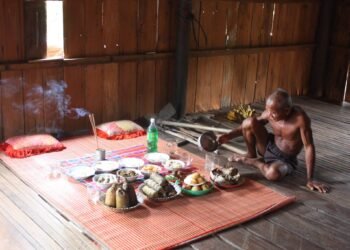
The primary function and role of the Neak Ta is to be the spiritual nexus of agricultural yield or the balance of fertility. As non-human beings associated with the rice fields, they guarantee a full and prosperous rice harvest. Consequently, the animistic rituals of the communities surrounding the Sambor Prei Kuk temple area are typically held at the conclusion of the rice cycle (when the harvest is fully complete) or at the start of a new rice cycle. Notably, the Kuoy people perform their Neak Ta ceremonies before the ethnic Khmers. This earlier timing is due to the traditional custom of the Kuy preferring swidden (shifting cultivation) rice farming. They begin clearing, slashing, and burning the forest to plant rice from Khae Meakh (Magha) until the end of Khae Phalkun (Phalguna), depending on the size of the field.
They strive to complete the forest clearing before Khae Chetr (Chaitra), as they believe this month is intensely hot, making burning easier, and there are early rains. Swidden rice cultivation takes six months. Therefore, the rice harvest is only possible in Khae Ossuch (Asvina) or Khae Kadeuk (Kartika). This is why they choose Khae Mekkesar (Mārgashīrṣa, the smaller Meakh) or Khae Pous (Puṣya) as the time for the Neak Ta ceremony. Traditionally, the swidden rice varieties they favored included Srov Chork Kaeng, Srov Ronok, Srov Chhoeung Poas, and Srov Phkar Sla Krohom, among others. However, these rice varieties are now almost entirely lost.
In contrast, the Khmers around the Sambor Prei Kuk area typically hold the Neak Ta and Lieng Arak (feeding the spirits) ceremonies in Khae Meakh Thom (Greater Magha) or Khae Phalkun. The Royal Ploughing Ceremony (Chrot Preah Neangkor) is held at the beginning of Khae Piseakh (Vaisakha). The choice of Khae Meakh Thom for the Neak Ta ceremony stems from the ancient custom of cultivating wet-season rice or deep-water rice. Wet-season rice can be divided into three main types: early rice (srov sral), middle rice (srov kandal), and heavy rice (srov thngun). Early rice is grown only for a small interim consumption, as it can be harvested before heavy rice, taking just over three months. The traditional early rice varieties cultivated in this area included Srov Chong Vay Pdau, Srov Kreum, and Srov Doh Year. Middle rice refers to rice that takes about four to five months to cultivate. Middle rice varieties grown a few decades ago included Srov Leak Sleuk, Srov Neang Yuon, Srov Sambok Angkrong, Srov Phka Khnhei, and Srov Bantoh Phluk. The third type, heavy rice (srov thngun or srov kanlah), includes both floating rice (srov loeung teuk) and transplanted rice (srov santuong). Floating rice is broadcast-sown from late Khae Chetr or early Khae Piseakh, which marks the beginning of the “rice cycle” or “rice season” anew. Traditional heavy rice varieties included Srov Kropol, Srov Ch’ang, and Srov Bang Kok. The lifecycle of floating and transplanted rice is more than six months, similar to swidden rice. Consequently, the complete harvest is gathered around Khae Mekkesar (Mārgashīrṣa, the smaller Meakh) or Khae Pous (Puṣya), leading to the tradition of holding the Neak Ta ceremony in Khae Meakh Thom, which is when the harvest is fully completed. Furthermore, in Phum Chong Prei and Prei Preah villages in Kampong Svay commune, about 8 kilometers southwest of Sambor Prei Kuk, the Neak Ta ceremony is held in Khae Phalkun. These villagers previously celebrated the Neak Ta ceremony in Khae Meakh Thom like other villages. However, as residents now prefer dry-season rice cultivation, they have shifted the ceremony to Khae Phalkun. The selection of Khae Piseakh for the Royal Ploughing Ceremony is due to its association with the belief in requesting rainfall for a full rice harvest and preventing lightning strikes on children tending livestock. This is because Khae Piseakh marks the start of the rainy season, characterized by rainfall and lightning.
Both the Khmer and Kuoy people share the belief that Tuesday and Saturday are “strong days” suitable for performing the Neak Ta ceremony, and they often choose the waxing moon period over the waning moon. This is because they believe that Tuesdays and Saturdays are days when non-human beings can emerge and communicate regarding their concerns. This is in contrast to the Angkor area and some regions in northern Cambodia, stretching to Buriram and Surin provinces (Thailand), which consistently choose the 3rd waxing day of Khae Meakh for their festivals and various rituals, especially the Neak Ta ceremony (see Ang Choulean 2012-2013: 43-44). A similar fixed date is observed in Phum Mohor village near Sambor Prei Kuk, for a ceremony called “Raising the Lok Yeay” (Loeng Lork Yeay), held consistently every year on the 9th waxing day of Khae Meakh.
The residents of Phum Mohor and surrounding villages believe that Lok Yeay is the powerful non-human owner of the temple in the area, and only after the Loeng Lork Yeay ceremony is completed at Mohor Pagoda can the Neak Ta ceremonies be held in the surrounding areas.

Discussion about this post