
 Khmer
Khmer
By: MANG Valy, AN Raksmey, SREY Sambunnarong
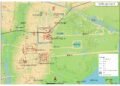
In Kampong Thom province, communities of the Kuoy ethnic minority are concentrated, particularly within the forested administrative districts of Prasat Balang, Prasat Sambo, and Sandan, which border Preah Vihear province. Culturally, the Kuoy people exhibit significant assimilation with Khmer culture, adopting Theravada Buddhism, which includes attending pagodas (wat), supporting monks, and celebrating Buddhist holidays similarly to the Khmer majority.
The exception to this cultural convergence is the Kuoy language, which is still used for daily communication. For instance, Veal Veng Village—a settlement with generations of Kuoy residents—maintains strong ties to four local pagodas (Kampong Sbov, Kirivong, Choan Laeng, and the recently established Suos Krun). Villagers are generally bilingual, speaking both Kuoy and Khmer for internal and external interactions.
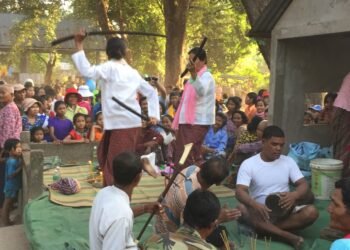
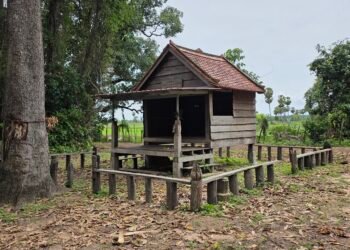
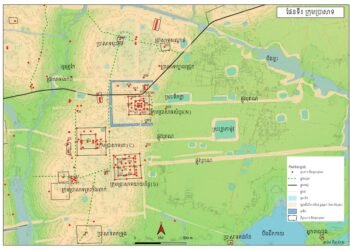
A unique cultural practice that distinguishes the Kuoy from the Khmer is the Iron Offering Ceremony (Pithi Saen Dek) (see Kong Virak 2005–2006: 49–50). Historically, the Kuoy were highly skilled iron smelters. Although the practice of iron smelting has ceased for a long time, traditions and beliefs associated with iron remain deeply embedded in Kuoy culture. The remnants of ancient iron smelting hearths, which the Kuoy call “Sanlung,” including iron slag and the clay pipes used to drain it, can still be found scattered throughout the forests near modern Kuoy villages (see Dupaigne 1992, translated by Ang Choulean and Kong Virak 2006: 177–192).
The Saen Dek is integrated into the larger ancestral offering rites during the annual Pchum Ben (Ancestors’ Day) festival.
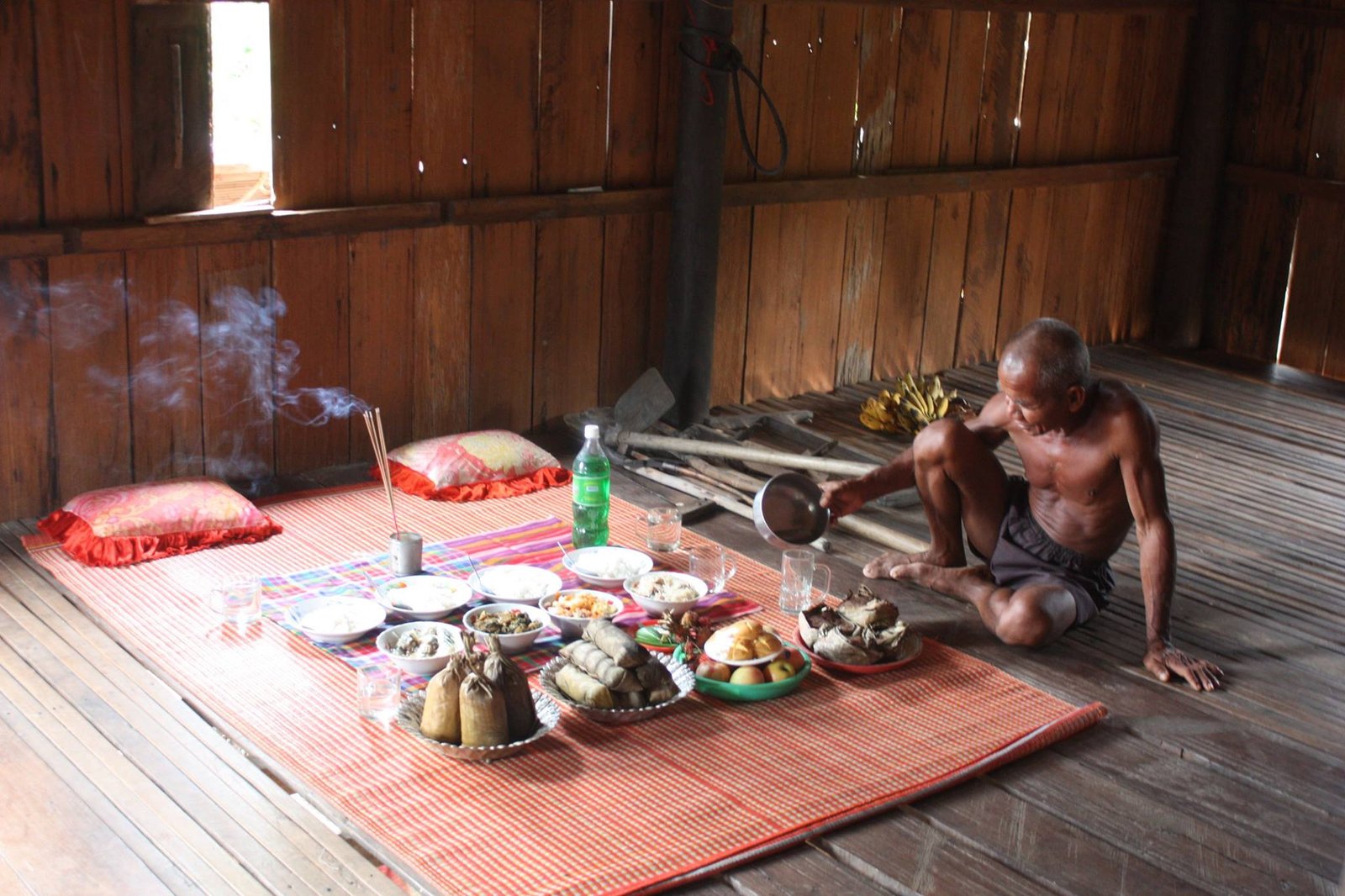
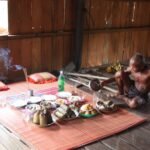
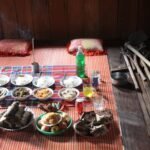
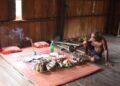
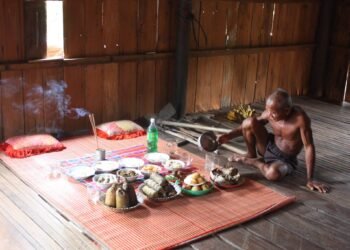
- Ancestral Offering: On Pchum Ben Day, each family in Veal Veng prepares an elaborate offering of food (rice, curry, cakes, desserts, delicacies) and clothing (shirts, skirts, scarves) for the spirits of their ancestors to consume until satiated. Following this, the villagers dress and proceed to the local pagoda to attend the monks’ chanting, mirroring standard Khmer Buddhist practice.
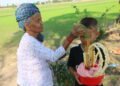
- Iron Tool Offering: The distinctive Kuoy custom involves placing all household tools made of or containing iron—such as knives (kambit), axes (puthoav), saws (rona), billhooks (phgak), hoes (chob kap), sickles (kandiev), and weaving equipment—together with the ancestral offerings. These iron implements are tied with pieces of thread.
- Invocation and Belief: During the ritual offering, an invocation is made: “Please prevent these tools from cutting hands or feet when used daily in the home or in the fields.” The Kuoy integrate the iron offering with the ancestral offering because their historical iron smelting tradition was connected to the belief in Preah Pisnukar (Vishvakarma), the deity believed to have aided in the fusion of iron-bearing rocks into usable iron. The Saen Dek thus serves as an act of gratitude and remembrance for the divine assistance received.
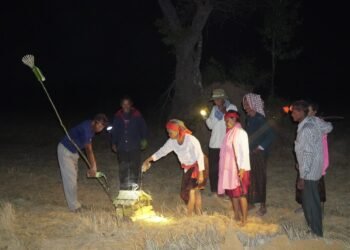
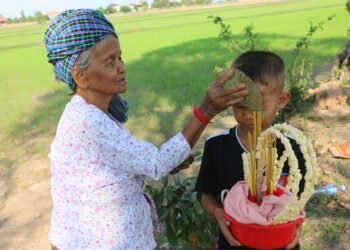
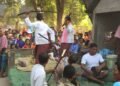
- Usage Protocol: In the past, the tools offered during the Saen Dek were strictly forbidden from being used again until the entire Pchum Ben festival concluded. Today, however, this practice is relaxed. Due to the urgent demand for tools during the essential agricultural season, many implements are immediately returned to use after the initial offering. Nonetheless, families do not remove all the tools; some remain to be offered a second time upon returning from the pagoda on Pchum Ben Day. Only after the festival has completely ended are all the offered iron tools returned to normal daily use (Figures 1-4).

Bibliography
គង់ វីរៈ
២០០៥-២០០៦, “ពិធីសែនដែករបស់ជនជាតិកួយភូមិវាលវែង”, បណ្តាញពត៌មានក្នុងវប្បធម៌ខ្មែរ, ១: ៤៣-៤៤។
Dupaigne, B.
- ‘La métallurgie dans l’ancien Cambodge. Travail des dieux, travail des hommes’, Etudes Rurales, Vol. 125 (1), 13-24.
Discussion about this post