
 Khmer
Khmer
By: MANG Valy, AN Raksmey, SREI Sambunnarong
Supported By: UNESCO Participant Programme 2024-2025
The Neak Ta is conceptualized as the preeminent non-human entity within Cambodian communities, holding a unique status that transcends a simple spirit, as it is understood to be simultaneously the land and the people (Ang Choulean, 2000). This figure is fundamentally an ancestor who first entered the primeval forest, initiating the founding of the village and enabling the cultivation of crops, thereby ensuring agricultural productivity that could sustain successive generations on that same land.
Consequently, a major annual ritual, known variously as Leung Neak Ta (Ascending the Neak Ta), Leung Lok Ta (Ascending the grandfather), Leung Méakh (Ascending the [name of month/season]), or Som Teuk Phlieng (Asking for Rain), is performed each year. This ceremony is conducted following the completion of the rice harvest to express honor, acknowledge the power, and offer gratitude to the Neak Ta as the community’s sovereign guide. The ritual specifically thanks the Neak Ta for having provided sufficient rainfall to nourish the previous year’s agricultural cycle.
Crucially, the ceremony allows the villagers to establish direct communication with the Neak Ta through a spirit-possession ritual (Banhchoin Roup). This interface is utilized to articulate communal concerns, particularly those related to agriculture. The primary objective is to request a full and generous rainy season for the upcoming cycle, ensuring the new rice crop flourishes. Furthermore, the ritual serves as an opportunity for the community to invoke the Neak Ta‘s spiritual energy to expel all forms of misfortune and malevolent forces from the village, securing peace, prosperity, and an abundant harvest for the year ahead.
Furthermore, the ritual space for the ceremony is invariably situated directly in front of the local Neak
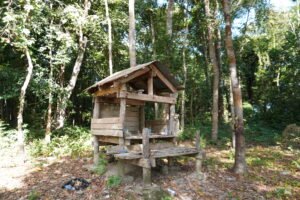
Ta shrine (spirit house). Every village within the region under investigation possesses such a Neak ta shrine. These structures vary in their construction, with some built of wood and others of concrete, typically featuring corrugated iron roofing (Figure 1). While some villages maintain more than one Neak Ta shrine, the full-scale communal Leung Neak Ta ceremony (the spirit propitiation ritual) is not performed for all of them. The large, significant ritual is customarily reserved for the Neak Ta believed to possess the greatest spiritual power and influence, often considered the principal or founding guardian spirit of the locality. Other, lesser Neak Ta spirits may receive only minor, simplified offerings and rites.
Why do locals choose the Neak Ta shrine as the location to perform the Leung Neak Ta ceremony?
Mao Sithibunnavadh (2015:20-40) posits that the community’s choice to conduct the Leaung Neak Ta ceremony at the Neak Ta shrine is rooted in the deity’s functional association with agricultural land and productivity. The Neak Ta is conceptualized as the epicenter of crop yield and agricultural stability. The latent energy within the Neak Ta requires human intervention to be actively disseminated. Consequently, villagers perform the ritual to access and mobilize this power, effectively positioning the Neak Ta as the spiritual guarantor of the harvest, and the participants as agents drawing on that energy. The specific ritual performance is designed to ensure the diffusion of the Neak Ta‘s energy across the communal rice fields, thereby securing a bountiful harvest. Reinforcing this link between the deity and the land, the Neak Ta symbolizes the cultivable soil. Hence, performing the ceremony in front of the shrine, or placing ritual stones within it, is symbolically analogous to the act of sowing seeds directly into the rice paddies (Mao Sithibunnavadh 2015:35).
- Participants
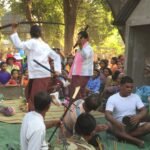
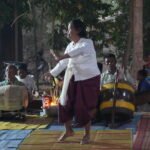
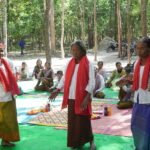
The successful execution of this ritual is entirely dependent on human engagement, as individuals are responsible for initiating and organizing the rite, and subsequently drawing the requisite energy from the Neak Ta. Participants in the Leung Neak Ta ceremony constitute a specific hierarchy, which includes the ritual head (Chao Mueng), the Medium (Roup Snorng), the Attendants (Snom), the instrumentalists (Neak Phleng), and the general community members and farmers (Kon Srok Kon Srae) (See Figure 2).
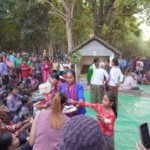
Who is the Chao Mueng?
The term Chao Mueng designates an elderly male figure vested with the knowledge and authority to orchestrate the ritual, ensuring its proper and standard execution. While their function parallels that of the Acharya (master of ceremonies), the Chao Mueng‘s appointment is secular, emerging either from communal selection or by serving as the designated ritual manager within the village, rather than being linked to the Buddhist monastic system. The term Chao Mueng itself is derived from Siamese influence dating back to the Middle Period, historically signifying a high-ranking regional official (e.g., ‘head of the district’ or ‘provincial governor’). Consequently, within the Leung Neak Ta ceremony, the Chao Mueng acts as the primary leader and organizer, whose presence is essential for the smooth progression of the rite. Typically, a single village or ceremony may involve multiple Chao Muengs. The comprehensive study across 15 surveyed villages (encompassing both Khmer and Kuoy ethnic groups) confirms the ubiquitous role of the Chao Mueng in leading the proceedings. Crucially, Chao Muengs possess a precise and detailed comprehension of every ritual component, carrying out the practices as they have been learned and transmitted through intergenerational heritage.
Who is the Roup Snorng (Medium)?
The Roup Snorng, often abbreviated to Rup, is the designated individual who serves as a conduit for communication between the human and spirit realms, facilitating spirit possession. Mediums can be of either sex—a phenomenon described by the local observation that a “male spirit [may be] possessing a female medium or a female spirit [may be] possessing a female medium.” The specific characteristics and mannerisms assumed during possession are typically retained across generations and are unique to each Roup Snorng.
Upon possession by a spirit (Neak Ta), the medium’s behavior alters noticeably from their baseline personality. Some Rup Snorngs may engage in ritual consumption of alcohol or tobacco and modify their clothing to align with the perceived gender of the possessing Neak Ta. Other mediums manifest distinct temperaments, such as displaying flirtatious gestures, engaging in petulance, or expressing anger, often soliciting placation from others. These behavioral shifts are key indicators that the spirit has successfully embodied the host. Furthermore, specific attire—such as wrapping a cloth into a kben, donning a head wrap, and wearing a waist sash—signals that the possessing spirit is male.
During a single Leung Neak Ta ceremony, one Roup Snorng may be inhabited sequentially by multiple Neak Ta or spirits, with each entity distinguishable by its unique demeanor and mannerisms. In certain instances, attendants (Snom) directly seek identification from the possessing entity by inquiring, “What is your name, Grandfather?”
The field research revealed the presence of both male and female Roup Snorngs (mediums) across the surveyed villages. A general observation, however, indicates a demographic prevalence of female mediums over male mediums. Notably, male Rup Snorngs are often associated with hosting the most potent Neak Ta (local spirits), a pattern documented in villages such as Sambor, Chei, Chong Prei, and Prei Preah.
Furthermore, spiritual cosmology in each village is characterized by a multiplicity of Neak Ta, with some communities believing their number to reach as high as 121. Crucially, within this extensive pantheon, one Neak Ta is invariably recognized as possessing the paramount power in the locality. This most powerful spiritual entity is the specific anumanussa (spirit) for whom the Leung Neak Ta ceremony must be organized and performed.
A salient feature of this ritual system is the establishment of Roup Snorng (medium) lineage, with individuals inheriting their role through patrilineal or matrilineal succession. For instance, in Chong Prei and Prei Preah Villages, the sole medium, a male named ‘Thim,’ inherited the spiritual function from his father.
Crucially, the concept of lineage extends beyond the human medium to the Neak Ta (spirits) themselves. A case in point illustrates this: ‘Ta Pich,’ the paramount Neak Ta of Cheay Sampov Village, is the biological younger brother of ‘Ta Mok,’ the most powerful Neak Ta in Chei Village. These two figures are understood to be the offspring of ‘Yiey Reach’ and ‘Ta Thoang.’
This sibling relationship dictates the temporal organization of the rituals. A communal belief mandates a ritual prohibition (trornom): the ceremony for the junior Neak Ta, Ta Pich (Chey Sampov Village), must be fully completed before the ceremony for the senior neak ta, Ta Mok (Cheay Village), can commence. This ancient tradition—prioritizing the ritual for the less powerful younger brother—is theorized to stem from the recognition that the elder Neak Ta possesses greater spiritual influence, necessitating the subordination of the junior’s ritual. This protocol parallels modern formal events where lower-status individuals present first before the presiding dignitary delivers the main address, or where high-status individuals are accustomed to not cutting the ribbon first at inaugurations.
The spiritual hierarchy is further underscored by inter-village ritual cooperation and spatial arrangements. The Ta Pich ceremony requires the presence of the Ta Mok medium (from Cheay Village) as a presiding figure, and conversely, the Ta Mok ceremony requires the Ta Pich medium (from Cheay Sampov Village) to assume a similar role. Decades ago, the Ta Mok ceremony involved an elaborate Arak music procession, with villagers trekking to ‘Boeung Kumpout Khlout’—a location marking the border between the two villages—to ceremonially welcome the arrival of the Ta Pich medium. This journey from Cheay Sampov to the border traversed three significant landmarks: Trapeang Kou Slab, Trapeang Andoung Bei, and Trapeang Chhes Khaol. Finally, the seniority is physically enforced during the rite, as the medium hosting Ta Mok is required to be seated at a higher elevation than the medium hosting his younger brother, Ta Pich (See Figure 3).
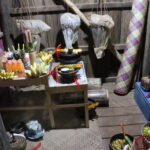
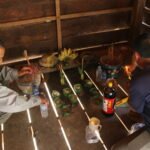
A further significant observation is that each Roup Snorng (medium) possesses a unique collection of consecrated objects designated for veneration. These ritual artifacts are transmitted intergenerationally from preceding mediums to their successors. This collection is housed on a special shrine known as the ‘Hoeung Krou’ (Master’s Shelf) (Figure 4), which is mounted inside the residence of the Roup Snorng or the Snom (attendant). The Hoeung Krou is a platform, often constructed from contiguous planks, sometimes made of materials like bamboo or rattan.
The shelf serves as the repository for various ritual materials (randab), which typically include: white liquor (sra sor), small offering cups, orange soda, bananas, a principal slar thuor (betel set), two or four smaller accompanying slar thuor (known as slar thuor aom), a water vessel (toak), perfume, talcum powder, cigarettes, betel nut, candles, and incense sticks.
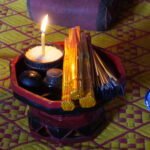
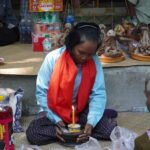
Among the enumerated sacred objects, the Toak (pedestal container) is critically essential, serving as a material anchor for the Roup Snorng (medium) during the possession trance. To facilitate the entry of the Neak Ta (spirit), the medium grips the Toak while entering a state of intense, non-ordinary concentration. Therefore, the Toak functions as the conduit that enables the spirit to cross the ontological boundary and possess the medium’s physical form; it similarly facilitates the spirit’s departure upon the conclusion of the ritual. The Toak itself is a blackened, lacquer-painted wooden vessel resembling a traditional Khmer pedestal tray (cheung pean). It is designed to contain several core ritual items, including incense, candles, consecrated wrist-tying thread (ambaos dai), small cups, wax tongs, oil, a miniature dagger (koun sien), and money (Figure 5). Fieldwork observations revealed a variation in practice: while some mediums retain the traditional wooden Toak, others who lack the specific artifact have substituted it with a pdeil (bowl) filled with rice and surmounted by a lit candle. Despite this material substitution, the functional continuity is maintained, as the replacement bowl is still ritually referred to by the name “Toak.”
Beyond the primary offerings, the Roup Snorng‘s (medium’s) residence houses several other significant artifacts, including the teap (offering tray), Arak drums, chapei (long-necked guitar), and swords.
The Arak drum (skor arak) is a type of ‘earthen drum’ (skor dei), constructed from fired clay and faced with the skin of a snake or monitor lizard. Each medium typically owns three to four of these drums, which are integral to the Leung Neak Ta and Lieng Arak (spirit feeding) ceremonies. A separate, specialized instrument is the Skor Chhvea (Javanese or long drum), a wooden, elongated drum with two faces covered in deerskin. These drums are always played in a pair by two musicians seated opposite one another, exclusively during the Lieng Arak ritual, particularly during the symbolic ‘boxing match’ between the Arak master and the disciples.
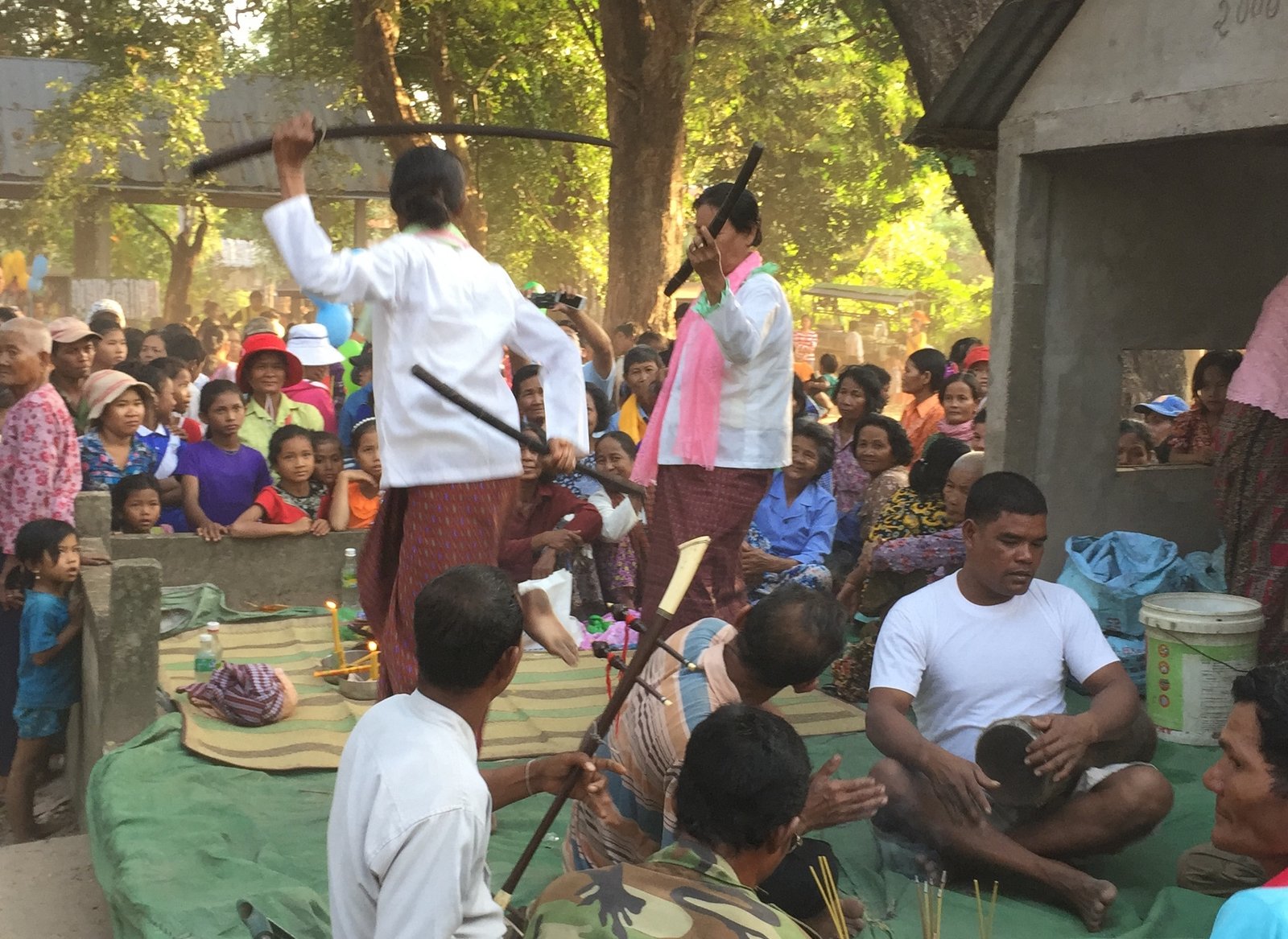
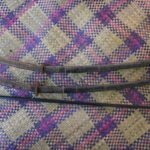
The sword, usually a pair of iron swords (sometimes termed ‘male and female swords’) (Figure 6), is particularly important, signifying the rank and power of the anumanussa (spirit), given the belief that some Neak Ta are powerful generals or warriors. While swords are generally employed in the Lieng Arak ritual, their use varies between villages during the Leung Neak Ta ceremony. In Chei Village, the medium actively brandishes the swords during possession (Figure 7). However, in Cheay Sampov Village—despite the Neak Ta‘s lineage connection to Chei Village—the swords are merely placed before the medium without the associated ritual dance. Regardless of their performative use, both the medium and the community hold a collective belief in the sword’s profound sacredness. Consequently, a prohibition exists against removing the swords from the local district, rooted in the conviction that such an act would invite misfortune upon the community.
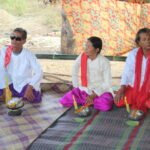
Who is the Snom (Attendant)?
The Snom refers to female personnel whose participation is essential for the Leung Neak Ta and Lieng Arak (spirit feeding) ceremonies. Functionally, the Snom serves as the principal assistant and organizer, ensuring the procedural integrity and smooth execution of the rite. This crucial role is founded on the Snom‘s specialized, profound understanding of the complex relationship between the human realm and the spiritual realm (anumanussa). The Snom is conceptualized as the Neak Ta‘s confidante, having been selected for the role by the spirit itself. A defining skill is their command of the specialized communicative medium used to interact with spirits, locally termed the “ghost language” (phesa khmaoch).
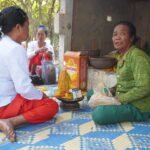
Throughout the Leung Neak Ta ritual, the Snom maintains close proximity to the Roup Snorng (medium), taking responsibility for all organizational logistics, including the medium’s ritual attire and the arrangement of all sacred offerings. Unlike the Roup Snorng and Chao Mueng roles, the Snom position is exclusively female, typically filled by middle-aged or elderly women (Figure 8).
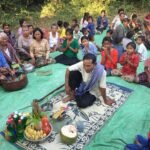
An exceptional variant of this role is observed in Chong Prei and Prei Preah Villages. In these specific ceremonies—which feature a male medium—seven virgin female attendants are present (Figure 9). These young women, generally aged 12 to 15, sit in a row behind the medium, offering silent veneration (hands pressed together), and do not perform the typical organizational duties of Snom in other villages. While a precise academic explanation is elusive, locals attribute this unique practice to a long-standing requirement by their district’s most powerful Neak Ta for virgin female attendants, a tradition that persists as a preserved intangible heritage.
Why is the musician necessary?
The presence of musicians, specifically the Arak ensemble, is fundamentally indispensable to the Leung Neak Ta ceremony, as the performance of the Arak music is a prerequisite for the medium possession rite. The music acts as a spiritual catalyst, without which the Neak Ta (spirit) cannot be summoned to inhabit the Roup Snorng (medium), thereby preventing human participants from communicating their concerns to the deity. This underscores the paramount significance of the musicians and the Arak ensemble in the entire ritual structure.
Contemporary practice faces a challenge due to the gradual scarcity of trained Arak musicians, an issue stemming from poor generational transmission of this cultural heritage. To sustain the ritual in the absence of live performers, some communities have turned to technological substitution. For instance, in the Kuoy ethnic village of Veal Veng, Arak music and chants are played via speakers or sourced directly from platforms like YouTube. This adaptation demonstrates the enduring strength of animistic belief systems within the Kuoy community, where technology is innovatively co-opted to fulfill ritual requirements and address musical deficits.
An exceptional variation is noted at the Leung Lok Yiey (Lady Grandfather Ceremony) in Mahor Village. While the Arak ensemble was traditionally used, it has been replaced over the past decade by the Pin Peat ensemble. This substitution was primarily pragmatic, utilizing the Pin Peat instruments already available at Mahor Pagoda, but crucially, it was only sanctioned after the medium consulted with and received explicit approval from Lok Yiey (Figure 10). In contrast, Lok Ta Moeung Hang, a spirit in the same area, explicitly rejects the Pin Peat ensemble. This highlights the unwavering deference to and respect for the local, powerful spirits; all significant ritual changes—including musical instrumentation—must be vetted through the medium to secure spiritual consent. Transgression against the spirit’s explicit wishes is believed to invite supernatural punishment, such as illness or seizure, reinforcing the authority of the spirits in local life.
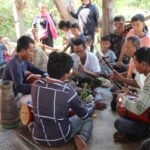
The typical Arak ensemble consists of five or more musicians, playing three Arak drums, one tro soau (three-stringed fiddle), and one pei pok (flute or oboe) (Figure 11). The inaugural piece performed is always the “Summoning the Master” (Aunh Chernh Krou) or “Summoning Pisnukara” (Aunh Chernh Pisnukara). This prioritization is due to the belief that Pisnukara functions as the master orchestrator of all ritual proceedings, a role acknowledged by the libation of liquor and soda onto the Pisnukara offering stand.
The music’s correct execution is deemed critical for spiritual access: if the music aligns with the proper tune and lyrics, the Neak Ta (spirit) can easily possess the Roup Snorng (medium). Conversely, an incorrect performance (khos phleng) impedes the spirit’s entry. Therefore, Pisnukara is crucial as the intermediary who guides the musical and vocal accuracy essential for the rite.
The Arak repertoire is extensive, encompassing many pieces (e.g., Nokor Reach, Sraom Neay, Phnom Sruoch, Sasor Kanloang, Domrei, Ek, Ta Thav, Srakum Kieal, Tei Rath, Srei Khmao, Preah Bath, Suriya, Sarika, Chumteav Mao, Mlop Dong, Prei Er Keut, Moin Rongeav, Kampoar, Oauk, Ak, Oum Touk, Beh Pka, Sapidan, etc.). The full collection is typically utilized only during the lengthy Lieng Arak or Lieng Krou (Master feeding) rituals, which span from dusk until dawn. However, the shorter Leung Neak Ta ceremony employs a select repertoire of only five to eight thematically relevant songs. These commonly include: Aunh Chernh Krou (often preceded by Khom Roung), Ta Va, Ta Chei, Oauk, Ta Thav, Mlop Dong, Suriya, Leung Sala, Antong, Sraom Neay, and Bom Phenh Khleang. The lyrics of these chosen songs are directly aligned with the sequence and purpose of the corresponding stages of the Leung Neak Ta ritual.
Who is the Kon Srok Kon Srae (Villagers/Farmers)?
The term Kon Srok Kon Srae refers to all community members—irrespective of age or gender—who adhere to the Neak Ta belief system and routinely participate in the Leung Neak Ta ceremony. This phrase functions as a self-identifier used by the people when engaging with the anumanussa (spirits).
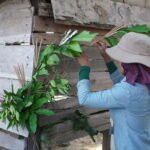
Field research indicates that while all surveyed villages share core beliefs, their specific ritual practices are not homogenous, leading to variation in the offerings presented by the Kon Srok Kon Srae. For example, the Kuoy ethnic group’s Leung Neak Ta ceremony involves participants bringing the “soul of the rice” (praloeng srov), also known as rice grains or rice flowers. Conversely, Khmer ethnic participants generally omit the praloeng srov from their Leung Neak Ta ceremony, though it is incorporated into the Chrot Preah Nongkeal (Ploughing Ceremony) in places like Sambor Village (see section 2). The praloeng srov itself is a constructed ritual object: parched rice (leach srov) is fixed to a coconut leaf stem, which is then curved downward to symbolically represent rice stalks heavy with ripe grains. This assembly is bound with fresh green foliage, such as ansae, ser moan, trasek leaves, or trasit grass (Figure 12).
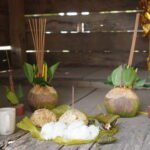
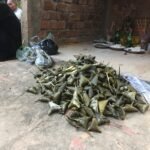
Beyond the items carried by participants, the general offerings (samnaen) presented to the Neak Ta include staples such as cooked rice, soup, cakes (num), liquor, and orange soda. Of particular ritual significance are two types of specialized cakes: Num Neali and Num Ansorm Sleuk Ph’av. These two are sometimes grouped together as the “Num Saen Neak Ta” (Neak Ta Offering Cakes), signifying their integral role in the enduring village customs. Num Neali cake is prepared from a mixture of long-grain rice and glutinous rice, which is subsequently pounded and sieved to produce flour, seasoned with minor additions of salt and sugar (Ang Choulean 2008-2009). A distinctive aspect of its preparation is the cooking method: the batter is sealed inside a coconut shell (traloak), which has a small opening pierced at its base, before being pasted onto the mouth of a clay pot with rice flour (Figure 13). Num Ansorm Sleuk Ph’av is also known regionally as Num Sbang or Num Phlauv Kangkaep depending on the wrapping style, this cake is made of glutinous rice, mixed with beans, sugar, and a small amount of salt, and wrapped in ph’av leaves (Figure 14). Furthermore, in specific locations like Veal Veng Village, the offering repertoire is broadened to include other specialized cakes, such as Num Bang Khlanh, Num Ambaeng, and Num Bompong Sramaoch.
2. Pre-Ceremonial Activities and Key Rituals
The Leung Neak Ta ceremony is consistently held across the surveyed villages during the Khmer lunar months of Pussa, Meakh Thom, and Phalkuna (approximately December through March). The precise date is reached through deliberation and consensus among the council of Chao Mueng (ritual heads), sometimes following consultation with the anumanussa (spirits) via a medium.
Once the date is confirmed, the Chao Mueng publicly announces the schedule and assumes the managerial role of delegating and distributing necessary tasks among the community members. The significant pre-ceremonial activities exhibit a blend of collective action and ritual preparation, signifying communal unity and affirming the persistent vitality of animistic beliefs.
These preparatory activities include:
Physical Preparation: Raking the ground (rea an doeuk), clearing the area by driving away monkeys and other animals, and conducting communal fishing.
Ritual Production: Manufacturing the slar thuor (betel set), collaborative cooking and wrapping of specialized cakes, and preparing the offering tray (pae) and the scaffolding (sangkheuk).
Financial Mobilization: Fundraising efforts (rai angkeas or rai robai).
Furthermore, Mahor Village practices a unique, pre-ceremonial domestic rite called ‘Pavarana’, which individuals perform at their private residences before assembling at the central ceremony site.
The Rea An Doeuk (Turtle) Ritual
The Rea An Doeuk ritual is a distinctive pre-ceremonial practice unique to Sambor Village, situated adjacent to the Sambor Prei Kuk archaeological complex. This particular intangible heritage had lapsed for over two decades but was successfully revived in 2025 through the efforts and coordination of the Kampong Thom Provincial Department of Culture and Fine Arts.
Traditionally, the Leung Neak Ta ceremony in Sambor is a four-day affair: Day 1 is dedicated to Rea An Doeuk (Raking the Ground/Turtle Ritual), followed by “Chasing Monkeys” (Denh Sva) on Day 2, “Fundraising” (Rai Angkeas) on Day 3, and the main Leung Neak Ta ceremony on Day 4.
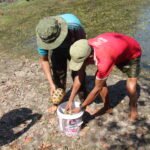
The ritual’s name reflects its underlying symbolism. While the Khmer dictionary defines ‘Rea’ (1967:1032) with meanings such as ‘to forbid’ or ‘restrain,’ the turtle (An doeuk) is culturally recognized in Khmer belief as a symbol of water and coolness (Ek Kalyana 2003). The Rea An Doeuk ritual centers on catching turtles to be prepared as an offering for the Neak Ta. The central conviction is one of ritual reciprocity: by consuming the turtle dish, the Neak Ta is appeased and, in return, ensures a full and adequate supply of rain, which is vital for irrigating the villagers’ entirely rain-fed agricultural land. This connection underscores the fundamental function of the Neak Ta as the spirit linked to the rice fields, and the ritual serves as a proactive measure to alleviate all communal anxieties regarding water supply for the crops.
In Sambor Village, the Rea An Doeuk ritual is preceded by an announcement made one- or two-days prior by the Chao Mueng (ritual head) and the village chief, informing residents of the meeting time. The assembly point is the “Prei Kon Nga” (Spirit Child Forest), located north of the village. The communal procession usually commences around 10 am.
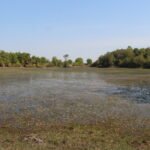
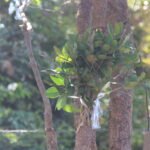
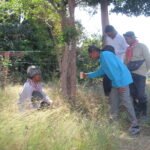
Before departure, the Chao Mueng leads the participants in a ritual offering (saen pren) at Prei Kon Nga to formally notify the local Neak Ta of their intentions. The procession then proceeds on foot toward a series of ancient ponds in the northern part of the village, including Trapeang Chpis, Trapeang Thla, Trapeang Teak, Trapeang Ta Mok, and Trapeang Chrei Lung (Figure 15). A small, essential offering is required at each pond: a wild betel set (slar thuor prei) is broken off and affixed to a tree, followed by a libation of liquor while addressing the spirits (Figures 16-17).
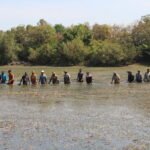
The Rea An Doeuk is most effective with a large number of participants, whose presence is encouraged regardless of gender. The participants form a line, holding hands, and move forward, simultaneously using their feet to rake the pond water (Figures 18-19). This action involves sweeping and disturbing the water with their feet, specifically attempting to make contact with a turtle’s shell. While the ritual is named for the turtle, the participants also capture fish and snakes.
Upon making contact with a turtle, the individual must dive into the water to secure the animal. A successful catch is met with a loud, communal cheer, which serves as an auspicious sign. This collective affirmation symbolizes the anticipated abundance of the next rice harvest, signifying that the new agricultural season will be blessed with fully sufficient rainfall (Figure 20).
The turtles captured during the Rea An Doeuk ritual are subsequently prepared as a specific offering for the Neak Ta on the final day of the ceremony (Day 4). Sambor Village custom rigidly dictates that the turtle meat must be stir-fried with glass noodles (mee suor); no other culinary preparation is permissible. This mandatory choice suggests the profound and long-standing integration of Chinese culinary traditions within Khmer social practices. Commenting on this phenomenon, Ang Choulean (2020:19-20) proposes that the incorporation of Chinese-style dishes into ritual contexts may be intended to convey a sense of extravagance or opulence (heu ha).

The Denh Sva (Chasing Monkeys) Ritual
The Denh Sva ritual, like Rea An Doeuk, is a unique, exclusive practice of Sambor Village. The term does not denote expelling monkeys from the forest but rather describes a collective communal activity of actively chasing, trapping, and capturing monkeys within the extensive forest area (specifically the Sambor Prei Kuk complex). The captured monkeys are then roasted (chha-euol) and presented as a sacrificial offering to the Neak Ta. Following ancient custom, the Sambor community convenes for Denh Sva on the second day of the four-day ceremony, immediately after the Rea An Doeuk ritual performed on Day 1. Elders in the community often refer to the target animal by the appellation “Akantuy Veng” (‘Long Tail’).
Local belief holds that the Denh Sva (Chasing Monkeys) ritual is a modern substitute for an ancient practice of human sacrifice, which originally demanded one human life annually from a rotating family. The substitution is justified by the conviction that the Neak Ta specifically requires an animal that dwells in the forest canopy. This constraint excludes domestic animals and even perching birds, based on the rationale that arboreal mammals visually resemble humans. While squirrels or tree shrews (kanghaen) are permissible substitutes if monkeys cannot be found, villagers commonly report that years featuring such substitutions often coincide with periods of communal instability, misfortune, or discord (kaliyuga). Several decades ago, participation in the monkey chase was near-universal, with community members—including professional hunters—readily assisting, driven partly by a tradition that forbade people from leaving the village on the day of the ceremony. However, contemporary participation has decreased significantly, primarily due to the out-migration of many villagers seeking employment elsewhere.
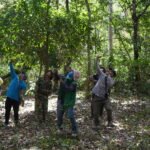
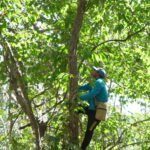
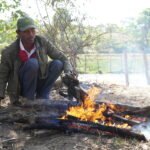
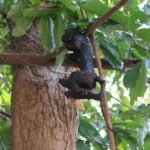
Historically, the hunt utilized traditional slingshots (sna); however, the practice has modernized to rely exclusively on catapults (champeam). The hunt is largely conducted by men who enter the deep forest armed with these weapons. Upon locating monkeys, the group coordinates to chase and shoot the animal until it is killed (Figure 21). Finally, once the monkey is deceased and lodged in the canopy, a designated individual must climb the tree to retrieve the sacrificial animal (Figure 22). The sacrificial monkey must, as a strict requirement, be killed immediately upon capture. The carcass is then singed clean, eviscerated to remove the feces, and finally grilled until completely dry (chha-euol) (Figure 23).
On the fourth and main day of the ceremony, the preserved, grilled monkey is transported to the ritual site and conspicuously displayed by being hung from a treetop located directly opposite the entrance to the Neak Ta shrine (Figure 24). The disposal of the monkey differs significantly from other animal offerings, such as the crucified chicken (moan chhkang). Instead of being removed from the village, the monkey is ritually mandated to remain fixed to the treetop until it naturally dries out and disintegrates.
Communal Fishing (Chap Trei Ruom Knea) as a Ritual Resource
Communal fishing is a pre-ceremonial activity undertaken to secure the necessary fish supply for the Leung Neak Ta ceremony. Each community designates one or more ponds as the property of the Neak Ta and a shared communal resource. A strict ritual prohibition (trornom) forbids any individual from fishing in these ponds prior to the ceremony day, with transgression believed to incur spiritual punishment from the Neak Ta.
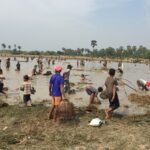
The location for this activity varies by village. In Sambor Village, fishing occurs at Trapeang Thla, opposite the Lok Ta Prei Thom shrine. While, in Lvea Village, fishing occurs at a pond opposite the Neak Ta Chas Srok shrine. Of special note, in Chei Village, prior to 2019, this village’s communal fishing, held at a pond approximately 500 meters southwest of the village, was a major, vibrant event. Fishing was permitted at noon, preceding the 3 pm start of the Leung Neak Ta ceremony. Participation was strictly limited to local residents of all ages and genders, with outsiders excluded (Figure 25). Only three traditional fishing tools were permitted: the angrut (cone-shaped trap), the fishing net (samnanh), and the chhnuk (trap). The catch was distributed for both domestic consumption and for use as ritual dishes. The communal fishing tradition in Chei Village was discontinued after 2019. Local authorities made the decision to deepen the ancient pond for municipal water use, forcing a shift in fishing practice to merely casting nets from the pond’s edge.
Fundraising (Rai Angkeas / Rai Robai) Rituals
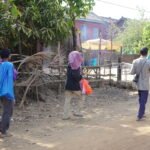
The collection of resources, known as Rai Angkeas or Rai Robai, is a mandatory pre-ceremonial activity shared across the studied villages, though the timing and scope vary. The goal is to amass a comprehensive range of donations, including: funds, materials, paddy rice, milled rice, prepared food, snacks, liquor, beverages, and livestock items (chickens, ducks, meat, eggs) (Figure 26).
In Sambor Village, fundraising is scheduled for Day 3 of the four-day ceremony. The collection efforts extend beyond the village boundaries to include Kampong Chheu Teal Village, whose residents are consistent annual participants in the Sambor Leung Neak Ta ceremony. While, in Ta Laek Thmei Village, the collection is condensed, occurring on the morning of the main ceremony day, with the ritual commencing in the afternoon (Figure 27). Collection is strictly limited to the village itself. The individuals responsible for undertaking the Rai Robai are exclusively middle-aged and elderly men. Historically, collectors utilized shoulder poles (dong raek) for the practical transport of the diverse donated goods.
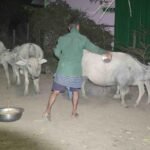
The Bavareana Kou Krabei (Apology to Cows and Buffaloes) Ritual
The Bavareana Kou Krabei is a distinct, localized ritual observed solely in Mahor Village, performed annually on the 9th waxing moon of the month of Meak Thom—the same day as the Leung Lok Yiey ceremony. This timing is a fixed, unvarying tradition, which differentiates it from other regions (e.g., Angkor and the northern areas), where rituals often take place on the 3rd waxing moon of Meak Thom (Ang Choulean 2012-2013:43).
The ritual is conducted on an individual, household basis for the family’s cows and buffaloes. The term ‘Bavareana’ (Khmer Dictionary 1967:622) signifies “opening an opportunity to speak” or “asking for an opportunity to speak.” Thus, the Bavareana ritual constitutes a formal address to the draught animals.
The primary purpose of the ritual is to seek pardon from the animals for the physical abuse (beating, trampling, and verbal cursing) they endured while being used for all forms of agricultural labor (plowing, hauling, etc.). By performing this act, the villagers seek absolution from the accumulated karmic retribution resulting from their mistreatment of the beasts of burden. Crucially, the rite is not restricted by gender or age; any family member may act as the representative to kneel, bow, and perform the act of apology for the entire household.
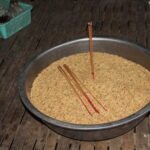
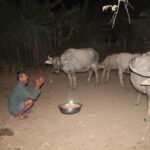
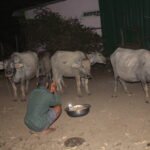
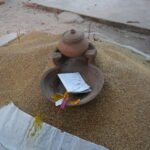
The Bavareana Kou Krabei ritual begins with the pouring of paddy rice into a basket (kancheu or kloem), proportionate to the container’s size. Five incense sticks are placed centrally into the rice (Figure 28). The rice basket is then carried to the animal pen and positioned directly in front of the cow or buffalo. The supplicant kneels, bowing deeply three times in respect to the draught animal, palms pressed together in veneration (pranom). This is accompanied by a verbal invocation requesting spiritual amnesty: an apology is offered for any past mistreatment (beating, abuse, or cursing), and a formal request is made to renounce those past actions, thereby seeking to sever karmic retribution. The prayer concludes with a wish for the animals’ well-being during the Leung Lok Yiey ceremony and a plea for all participants and animals to be released from karmic debt (Figures 29-30). Following the verbal apology, water is sprinkled onto the animals to symbolize wishes for health, happiness, and freedom from karmic consequence (Figure 31).
Immediately after the Bavareana concludes at the pen, the consecrated rice is transported overnight to the Leung Lok Yiey ceremony hall on the Mohor Pagoda grounds (Figure 32). This collected rice is then heaped onto a mat to form a tall pile, ritually designated as the “Phnom Srov” (Rice Mountain), symbolizing the completion of the annual rice cycle. The placement of a clay stove and a pot atop the Phnom Srov is highly symbolic, likely representing themes of fertility, procreation, or abundant yield (akin to the mortar and pestle symbolism previously discussed), intended to secure an even greater harvest in the upcoming season (Figure 33). Finally, following the monastic chanting, this rice is sold to generate revenue for funding the ceremony.
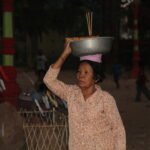
Preparing the Pae (Offering Tray) and Sangkheuk (Scaffolding)
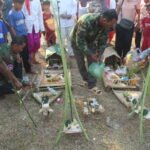
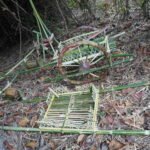
The Pae (offering tray) and Sangkheuk (scaffolding) are structures crafted from banana leaf sheath, specifically designed to contain offerings intended for the lower-ranking, often malevolent, spirits (anumanussa tiricchan). Within the Khmer cosmological framework (Ang Chouléan 1986), spiritual entities are bifurcated into two primary categories: Beneficial Spirits (e.g., Neak Ta, Arak, mrenh kongveal): These are entities that provide assistance, protection, and ensure the abundant yield and welfare of the community. Malevolent Spirits (anumanussa tiricchan): This category includes disruptive, lower-ranking entities—such as pisach (demons), khmaoch (ghosts), preay (female demons), and rombal—who are responsible for intrusion, disturbance, and the causation of various diseases and misfortunes within the village.
The term Sangkheuk is linguistically derived from the Pali word Sanghika. Structurally, the Sangkheuk is typically square, resembling the Pae (offering tray), but it is distinguished by the absence of floral ornamentation or small decorative cutouts. Both the Pae and Sangkheuk are designed to contain and deliver offerings to the category of spirits who are not held in honor. These recipients are the lower-ranking, bothersome spirits that are believed to actively harass, disturb, and inflict suffering upon the villagers. The offerings designated for these marginalized spirits are varied, but generally include cooked rice, prepared food, liquor, orange soda, bananas, num annsam cakes, fermented fish paste (prahok), salt, sugar, and money (Figures 34-35).
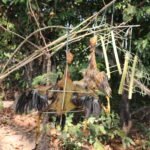
Villagers in the vicinity of the Sambor Prei Kuk archaeological site adhere to the custom of crafting multiple variations of the Pae (offering tray) to convey offerings to the lower-ranking tiricchan spirits. These variations include the flat Pae (Pae Reab), the Pig-Nose Pae (Pae Chramuoh Jruk), and the fox Pae (Pae Kanhchroung). The overall ritual display is augmented with various symbolic effigies, such as figures of elephants, horses, ceremonial posts (cheung trom), oxcarts, buffalo carts, chairs, school halls (sala), and shackles/stocks (khnaoh khneang). These elaborate offerings must be ceremonially led by a pair of crucified chickens (moan chkang). The preparation of the moan chkang is meticulous, requiring the skin and wings to be fully spread and intact without being torn. Anthropologist Ang Choulean (2012: 32–36) posits a symbolic interpretation for this practice, suggesting that the figure is not intended to represent torture but rather functions to visually deceive the malevolent spirits or to symbolically demonstrate the grand scale and substantial nature of the entire offering (Figures 36-37).
All ritual offerings directed toward the lower-ranking; malevolent spirits (anumanussa tiricchan) are considered a symbolic act. The Pae and Sangkheuk containing these offerings are typically prepared in the morning or at noon, prior to the main Leung Neak Ta ceremony, which generally begins in the afternoon. These items are deliberately positioned at the periphery of the ritual grounds, customarily toward the southeast of the Neak Ta‘s shrine. Mao Sithibunnavadh (2015: 57) explains that this marginal placement is a symbolic effort to conceptually delineate the area as being “outside the village boundary.” This spatial arrangement reflects the fundamental cosmological distinction: benevolent spirits (Neak Ta) must be contained within the human settlement, whereas the “ignoble spirits” or “forest spirits” are ritually consigned to the perimeter, which is the “outside” (krau srok), away from the human domain.
A key differentiation in ritual practice is observed along ethnic lines regarding the preparation of the Pae (offering tray) and Sangkheuk (scaffolding). These artifacts are exclusively prepared during the Neak Ta Leu ceremony in villages populated by the Khmer ethnic group. Conversely, the four surveyed villages primarily inhabited by the Kuoy ethnic group (Andas, Ta Laek Thmei, Koun K’aek, and Veal Veng) do not customarily include the Pae and Sangkheuk in their rites. The sole exception is Veal Veng Village, where a Sangkheuk is prepared and ritually dispatched shortly before dawn (refer to the Dispatch Ritual section for specifics).
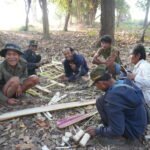
- Stages of the Ritual
A comparative analysis of the Leung Neak Ta ceremony across the Kuoy and Khmer ethnic groups reveals both points of convergence and divergence in ritual practices. This necessitates an in-depth, comparative study of every ritual stage within both ethnic traditions.
Even within the Kuoy ethnic group, there is no uniform timing for the ceremony:
Morning Ceremony: Observed in Veal Veng and Koun K’aek Villages.
Afternoon Ceremony: Observed in Andas and Ta Laek Thmei Villages, aligning with the Khmer practice.
This internal variation in timing suggests that significant differences are almost certainly present in the specific ritual stages and methods of execution between the groups. Furthermore, even among the Khmer communities surrounding Sambor Prei Kuk, ritual practices are not perfectly uniform, which is a recognized characteristic of the micro-variations inherent in local Khmer culture. The following section will sequentially detail the various stages of the Leung Neak Ta ceremony as practiced by both the Khmer and Kuoy.
The Kech Saen Pren (Offering Ritual) as the Initial Stage
The Kech Saen Pren is universally identified as the inaugural stage of the Leung Neak Ta ceremony, commencing immediately after the community has gathered. The sourcing of offerings varies: some villages prepare the food at the Roup Snorng‘s house, others at the Neak Ta‘s shrine, and some involve villagers carrying offerings from their own homes.
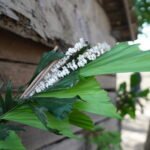
The Kuoy community in Veal Veng Village demonstrates a unique emphasis on agricultural symbolism. Participants bring not only customary offerings (liquor, soda, and specialized cakes like num bang khlanh) but also the “soul of the rice” (praloeng srov or phka srov), which symbolizes the rice plant itself, along with various crop seeds. The praloeng srov is tied to the Neak Ta‘s shrine to absorb its spiritual energy, performed with the ritual intent of securing an “abundant and excellent rice yield in the next farming season” (Figure 38).
The accompanying seeds—including rice, corn, beans, and sesame—represent the community’s staple crops. These seeds are ritually sown beneath the Neak Ta‘s shrine and accompanied by an invocation in the Kuoy language, which translates as a prayer for “peace and well-being, a good yield for rice, beans, corn, and sesame, and a greater harvest next year” (Figure 39).
A practice strictly observed by both the Khmer and Kuoy groups is the preparation of the wild betel set (slar thuor prei). This involves snapping off a wild leaf (without restriction to species) and affixing it to a shrine pillar, a tree near the shrine, or around the shrine perimeter (Figure 40). Commonly used leaves include plang sa, bay kranhenh, ansae, sasit, ser moan, and wild beans, among others.
The specific offerings presented to the neak ta vary considerably between villages. In Sambor Village (Khmer), maintains two strictly mandatory offerings (Figure 41): The grilled monkey (or akantuy veng), captured during the Denh Sva ritual. Glass noodles (mee suor) stir-fried with turtle meat, sourced from the Rea An Doeuk ritual. Secondary offerings include typical items like rice, soup, liquor, soda, num neali, num annsam sleuk ph’aov, num phlae ai, Chinese cakes, and slar thuor. Kuoy Villages (e.g., Ta Laek Thmei, Andas): These communities place a strong emphasis on offering pig heads, sometimes exceeding ten heads per ceremony (Figure 42).
The use of pork and mee suor (glass noodles) in the ritual cuisine is identified as an influence of Chinese culture. Ang Choulean (2020: 19–21) interprets the adoption of Chinese-style dishes as a practice of “extravagance” (heu ha). This adoption stems from the local Khmer and Kuoy perception of the Chinese as being more commercially successful and wealthier, suggesting a desire to match this perceived prosperity through ritual display. The presence of pig slaughtering in banquet scenes at the Bayon Temple’s southern gallery, often interpreted by researchers as depicting Chinese individuals or descendants (Chhum Menghong 2003), supports the long historical presence and cultural influence of the Chinese community during the Angkorian period.
The Saen Pren (offering ritual) for the Neak Ta is governed by a strict custom that prohibits solo performance. A minimum of two individuals is required for the Chao Mueng team leading the rite, as the procedure necessitates both a liquor pourer and a water pourer. In some villages, the Saen Pren team may include up to five Chao Mueng members. The pouring of liquor is considered vital, as alcohol is conceptually understood to be the necessary conduit for human communication with the spirits.
In Sambor Village, the ceremony involves a procession: participants first gather at the Roup Snorng‘s (medium’s) house before proceeding to the Neak Ta Tvear (Gate Spirit) shrine, which is centrally located and serves as the initial ritual site. After concluding the rites at the Neak Ta Tvear shrine, the group moves to the Neak Ta Prei Thom shrine, dedicated to the ancient local spirit (Chas Srok—sometimes referred to as Lok Ta Prei Kuk or Lok Ta Prei Thom).
Consequently, the Saen Pren ritual formally commences at the Neak Ta Tvear shrine. Once the offerings are arranged and the incense and candles are lit, the two lead Chao Mueng members enter the shrine. One Chao Mueng pours liquor while the other pours water over the offerings and onto the Neak Ta‘s stone, accompanying the act with the formal words of invitation and supplication, as follows:
“The supplication is as follows: ‘We respectfully invite Lok Ta Chas Srok (Ancient Village Master) who is responsible for the village, Lok Ta who cares for all the forests, especially Lok Ta Tvear (Gate Master) in the center of the village, and all 121 Lok Ta Prei Thom (Great Forest Masters)—we invite all Masters who are in any location which the descendants cannot fully enumerate. It is the cool season, the month of Meakh, the time for the ritual hall (Leung Rong), O Masters! We respectfully invite you to come here to celebrate the program which your descendants have organized. We ask for peace and prosperity; may the descendants only meet with happiness and be free from suffering. Furthermore, we ask that you send down much rain (preah varuna) so that the descendants can farm their rice fields and crops, allowing them to grow, flourish, and be abundant. We respectfully invite you to come and partake of the offerings…!’ ”
Following the initial invocation at the Neak Ta Tvear shrine, the Chao Mueng team observes a one-minute pause. They then repeat the entire ritual sequence—pouring liquor, pouring water, and reciting the full invitation—for a total of three repetitions, with a one-minute rest period between each (Figure 43). Upon the full completion of the Neak Ta Tvear rites, the community processes to the second location, the Neak Ta Prey Thom shrine, situated at the entrance to the Sambor temple group within the Sambor Prei Kuk complex. Here, the Saen Pren ritual is performed again, following the identical procedure used at the first shrine.
In contrast to Sambor Village’s dual-shrine rite, most other villages perform the Saen Pren ritual only at a single Neak Ta shrine on the day of the ceremony. While the method of offering remains consistent across villages, the specific items used as offerings may exhibit minor variations. Of special note, in the Kuoy-inhabited villages (Veal Veng, Andas, and Ta Laek Thmei), the entire Saen Pren ritual and the invitation to the Neak Ta are conducted exclusively in the Kuoy language. Despite the linguistic difference, the overarching content and intent of the invocation remain consistent with the Khmer practice, reflecting a shared ritual goal.
The supplication language used during the Saen Pren ritual in Sambor Village extends beyond simple ritual acknowledgment and gratitude for the Neak Ta. It incorporates an explicit request for two reciprocal benefits from the spirit: (1) the grant of peace and well-being, and (2) the provision of abundant rain.
This dual request confirms the deep entanglement of the Neak Ta belief system with agriculture, particularly rice cultivation. The spiritual entity (Neak Ta) is symbolically associated with the earth, and the ritualistic pouring of water over the stone within the neak ta’s shrine is a performative analogy for the rain needed to irrigate the farmlands. The primary objective is to secure the necessary rainfall to ensure the survival and success of their crops. The vital role of this rain-making function is further evidenced by practices in other areas, such as Roka Village (Stung Saen City), where rituals to request rain are performed repeatedly during the traditional planting months of Visakha and Chetra.
The Kech Banhchoin Roup (Medium Possession Ritual)
The Kech Banhchoin Roup (or Choin Roup), also known interchangeably as Banhchoul Roup (Entering the Body), immediately follows the Saen Pren ritual. Its commencement is signaled by the performance of the Arak ensemble, whose music serves as the ritualistic catalyst to summon all the spirits, specifically the 121 Lok Ta (Masters), to possess the body of the Roup Snorng (medium) and to participate in the celebration prepared by the villagers (Kon Srok Kon Srae).
The term Roup (form/body) is derived from Sanskrit and denotes the male or female individual who is capable of being inhabited by the spirits, thus facilitating communication between the human and spiritual realms. The Roup Snorng is chosen by the possessing spirit, which then “holds” or “controls” (kann) the body. The medium retains the agency to allow the spirit to enter their body at will. The specific identity of the medium is determined by the spirit that possesses them: if possessed by a Neak Ta, the person is called the Roup Neak Ta; if possessed by an arak, they are called the Roup Arak. The medium provides the spirit with a temporary physical form, enabling the spirit to communicate with and physically interact with human participants.
The execution of the Kech Banhchoin Roup (Medium Possession Ritual) is contingent upon the performance of musicians and a singer, whose correct musical rendering is necessary to successfully summon the Neak Ta into the Roup Snorng (medium). The accuracy of the music is believed to directly correlate with the speed of the spirit’s possession.
A mandatory ritual object is the toak (offering tray or platter), which must be positioned in front of the medium. The toak serves as the essential material conduit for the spirit to cross over and inhabit the medium’s body. The platter is typically arrayed with specific ritual items, including incense, candles, wrist strings (ambos dai), cups, wax tongs (danlab kramuon), oil, small folded pieces of banana leaf (kon sien), and money. Should an official toak be unavailable, a pedestal bowl (pdil) filled with rice and other offerings may be used as a substitute, but it retains the ritual designation of ‘toak’.
The Kech Banhchoin Roup begins with a sequence of music intended to facilitate spirit possession.
Initial Music: The Arak ensemble first performs either the “Summoning the Master” (Aunh Chernh Krou) or the “Guarding the Hall” (Khom Roung) followed by Aunh Chernh Krou. During these initial pieces, the Neak Ta have not yet entered; the mediums are engaged in deep concentration or a meditative state.
The Opening Passage (Ta Va): The next piece, “Ta Va” (or “Ta Va Si Chek”), is believed in Sambor Village to ritually open the path for all 121 Neak Ta to enter and possess the mediums. This piece is not universal; Lvea Village, for instance, substitutes the “Coconut Shade” (Mlop Dong) song after the initial summoning.
Possession and Ta Chei: The third piece in Sambor Village is the “Ta Chei” song, which signifies the successful possession of the mediums by the Neak Ta. At this stage, the spirits enter to partake in the celebration (Leung Roung) prepared by the villagers.
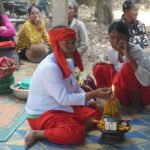
Upon possession, the occupying Neak Ta often demands items associated with an aggressive or powerful nature, such as liquor and cigarettes. The physical transition into possession is frequently marked by the Roup Snorng grasping the toak (offering tray) and rotating it while in the meditative state (Figure 44). Once possessed, the medium’s female attendants (snom) assist in changing the medium’s clothing, though this action is not universal (e.g., male mediums in Chong Prei and Prei Preah Villages often do not change attire). Upon possession, the Roup Snorng‘s (medium’s) attire is adjusted according to the spirit’s gender: male spirits (Neak Ta) are dressed with a kben (trousers), while female spirits wear a sampot (skirt). The possessed medium exhibits a completely altered demeanor and behavior, reflecting the personality of the inhabiting Neak Ta.
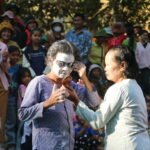
Male Spirit Manifestations: Male spirits are often characterized by aggressive traits, such as drinking liquor and smoking cigarettes (Figure 45), with attendants (snom) serving as pourers and lighter-holders. Some even offer liquor to the musicians.
Female Spirit Manifestations: Female spirits typically focus on aesthetics, applying perfume, lipstick, and powder, and soliciting praise (e.g., “Am I beautiful yet?”) from the assembled villagers (Figure 46), who must respond positively to flatter the spirit.
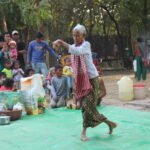
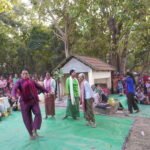
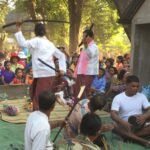
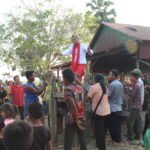
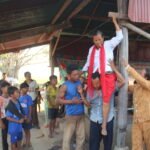
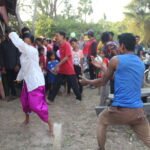
Both male and female spirits engage in joyful dancing (Figure 47), which ranges from gentle movements to swaying and vigorous jumping (Figures 48-49). Specialized manifestations are noted: in Chei Village, the medium performs a sword dance, reflecting the belief that the possessing spirit is a former military general (Figure 50). In Cheay Sampov Village, a medium performs a unique dance on a seven-tiered platform (rean teus) located northeast of the shrine (Figure 51). The ascent to the rean teus requires the medium to ride on a man’s shoulders, flanked by a man and a woman holding their hands; the descent reverses the roles, with the medium riding on a woman’s shoulders back to the main hall (Figure 52). While the underlying meaning of this gender-specific shoulder-riding is unclear, the possessing spirit is deduced to be male (based on the kben and smoking gestures), likely a powerful, presiding Neak Ta.
The period of Banhchoin Roup (medium possession) serves as the primary window for human interaction with the Neak Ta, allowing villagers (Kon Srok Kon Srae) to convey concerns and seek blessings, power, and energy from the spirit. Due to the spirit’s invisible nature (being a consciousness within the medium), communication begins with an identification protocol: attendants and villagers typically open the dialogue by asking, “Which Master is this?” or “What is the Master’s name?” Once the Neak Ta identifies itself, the discussion shifts to practical concerns impacting the community’s daily life, with a strong emphasis on agriculture (rice farming).
The most pervasive question across nearly all villages is, “Will there be much rain next year?” This fixation underscores the ceremony’s deep and inseparable link to agricultural cycles. The phrase “next year” in this context refers to the upcoming planting season, as the Leung Neak Ta ceremony is traditionally held after the completion of the previous rice harvest. The well-being of the rice crop is the paramount concern, reflecting the overwhelmingly agricultural occupation of the participating communities.
A specific case in Ta Laek Thmei Village illustrates how communal concerns may temporally supersede agricultural anxieties. During the Banhchoin Roup (possession ritual), the village chief and female participants focused their dialogue with the Neak Ta on non-agricultural infrastructure: specifically, requesting permission to fell four trees from the sacred Neak Ta ‘s forest for the construction of a village rest house (sala damnak) (Figure 53). The Neak Ta granted permission, although the exact timing for the tree felling remained unstated. This prioritization indicates that the immediate and most significant concern for the villagers during this annual ceremony was the construction project and the associated need for timber from the protected forest. Consequently, discourse concerning rice farming and general cultivation was noticeably minimal. Furthermore, the number of ritual paraphernalia related to the “soul of the rice” (praloeng srov) was observed to be fewer compared to the nearby Andas Village, suggesting a reduced emphasis on the agricultural theme for that specific year.
The Banhchoin Roup stage consistently features two key activities centered on blessing and healing the community:
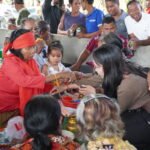
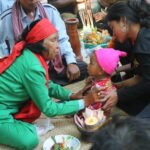
Blessing and Prosperity: The Neak Ta (via the possessed medium) ties a red thread onto the wrist of participants and sprinkles them with perfume or scented water, intended to bestow peace and prosperity (Figures 54-55). Individuals approaching the Neak Ta for this blessing bring trornap dai (token gifts), such as money, liquor, soda, or other offerings.
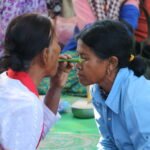
Ritual Healing (Stoah Phlom): The Neak Ta performs a spitting/blowing ritual (stoah phlom) on villagers suffering from ailments, which range from snakebites and swelling to various other sicknesses. This ritual act is performed to symbolically expel the illness from the patient’s body. The medium uses wax to anoint the affected area (e.g., head, forehead, abdomen, limbs) before performing the blowing action (Figures 56-57).
The continued prevalence of the stoah phlom practice in all villages serves as a significant indicator that, despite the advancements in modern medicine, traditional beliefs in the efficacy of the Neak Ta and indigenous healing rituals remain profoundly entrenched in the cultural mindset of both the Khmer and Kuoy populations.
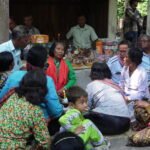
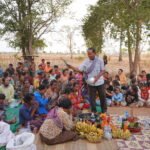
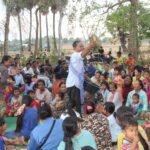
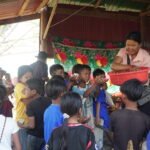
The distribution of the Robai (offerings) is a crucial and widely observed component of the Kech Banhchoin Roup (medium possession ritual). Robai refers to all the offerings presented to the Neak Ta, including food items (rice, soup, cakes, desserts), and beverages (soda, liquor). The Robai are considered ritually charged, having absorbed the Neak Ta‘s energy. Consequently, participating villagers (Kon Srok Kon Srae) actively compete to acquire them, driven by the belief that their consumption will confer good fortune (serei suosdei) and provide immunity from illness. Acquisition is conditional: villagers must engage the Neak Ta (e.g., dancing, playful interaction, or generally pleasing the spirit) before the spirit agrees to dispense the Robai (Figure 58). The Neak Ta sometimes throws the Robai to the crowd, particularly cakes such as num neali and num annsam sleuk ph’av (Figures 59-60).
The Kech Banh Chuon (Dispatch Ritual)
The Kech Ban Chuon is a ritual procession dedicated to sending offerings to the marginalized spirits (anumanussa), symbolically acting as an exorcism to expel malevolent “forest spirits” (khmaoch prei) from the village. It is performed sequentially with the Kech Banhchoin Roup (Medium Possession Ritual). In Sambor Village, the dispatch is prepared at the Neak Ta Tvear shrine and begins after the “Ta Chei” song concludes. The sequence is as follows: (1) Preparation: The musicians first play the “Inviting” song (Angtong). During this time, the medium, holding a staff or whip, inspects the ritual paraphernalia destined for the lower-ranking tiricchan spirits. (2) Ritual Paraphernalia: The items are exclusively constructed from banana leaf sheath and are placed behind a leading pair of crucified chickens (moan chhkang). These effigies—which include shackles, stocks, chairs, sangkheuk, pae (flat, pig-nose, fox types), and figures of elephants, horses, and oxcarts—are ritually conceptualized as vehicles for both transporting the offerings and symbolically banishing the low-ranking spirits from the human settlement. (3) The Offerings: The cargo consists of consumable items (rice, food, liquor, sodas, cakes, prahok, spices, etc.). (4) Commencement: The physical dispatch begins when the musicians switch to the “Hiding the Foreman” song (Sroum Neay). Other regions may use pieces like the “Boat Racing” (Oum Tuok) or the “Wasp” (Kanlang) for this stage.
The Dispatch Ritual begins with the possessed medium pointing a ritual object—a whip (in Sambor) or a staff and a sword (in Chei Village) (Figure 61) —at the pae, sangkheuk, and all associated paraphernalia. In Chei Village, the use of a staff and a sword by the possessed medium reflects the traditional belief that the spirits Ta Muk and Ta Pich were military generals (Figure 62). The Ta Muk and Ta Pich mediums also sprinkle rice over the items. This action is an exorcistic request for all ignoble spirits—believed to originate from outside the human settlement—to leave the village.
A unique feature in Lvea Village is the syncretic integration of Buddhism immediately before the dispatch. The Chao Mueng and all participants sit in veneration (pranom) and recite two core Buddhist chants in front of the dispatch paraphernalia (Figure 63): (1) Homage to the Triple Gem: Acknowledging and praising the supreme qualities of the Buddha, Dharma, and Sangha (Rinpoche 1995). (2) Dedication of Merit (Pattidana Gatha): Dedicating and extending accumulated merit to all sentient beings, including the spirits, thus aligning the Buddhist concept of merit transfer with the animistic function of sending offerings to the lower-ranking anumanussa tiricchan. This successful and harmonious blending demonstrates that, despite the Leung Neak Ta ceremony’s foundation in pure animistic beliefs, the pervasive influence of Buddhism readily finds common conceptual ground and acceptance among the participants, who are overwhelmingly Buddhist themselves.
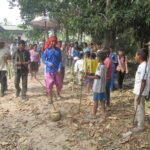
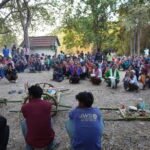
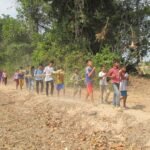
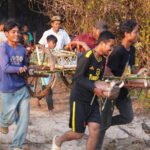
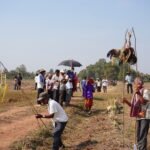
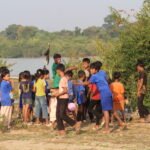
The procession of the Kech Banh Chuon (Dispatch Ritual) is typically led by children, without restriction based on gender, though adults and the elderly are not forbidden from participating. A strict ritual prohibition (trornom) governs the procession: carriers must absolutely not look back while transporting the offerings intended for the lower-ranking, malevolent spirits. The speed of the procession varies by village: (1) Rapid Dispatch: Some villages mandate that the children carrying the paraphernalia must run fast while adhering to the “do not look back” rule (Figure 64). (2) Normal Procession: Other villages maintain a regular walking pace (Figures 65-66). The belief underpinning the rapid dispatch method is that running quickly serves as an effective means to swiftly and expediently lead the malevolent spirits (khmaoch, preay, pisach, rombal) out of the human settlement, surpassing the speed of a standard procession.
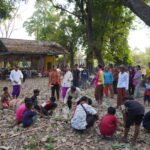
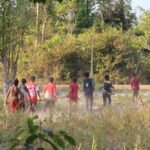
The analysis of the Kech Banh Chuon (Dispatch Ritual) reveals significant variability in the direction of the procession across different villages: South: Sambor Village, Southwest: Lvea Village, East: Cheay Sampov Village, North: Mahor and Chei Villages. This lack of a standardized compass direction suggests that the direction is not a ritually fixed parameter for dispatching offerings to the lower-ranking spirits. Rather, the direction appears to be a matter of localized custom, inherited from previous generations. The only consistent commonality is the final destination: all dispatch paraphernalia is invariably taken to a rice field (whether north, south, or southwest of the village) (Figures 67-68). This consistency leads to the conclusion that the ritual’s purpose is not determined by a cardinal direction but is inherently linked to the agricultural space, possibly to ensure the expulsion of malevolent influences from the immediate proximity of the fields.
Why are the paraphernalia, which symbolize the driving out of the forest spirits, dispatched to the rice field?
The rationale for dispatching the exorcistic paraphernalia Kech Banh Chuon to the rice field is rooted in the fundamental Khmer spatial cosmology that differentiates between the ‘Forest’ (Prey) and the ‘Village’ (Srok) domains. Prei (Forest Domain): this space is considered morally ambiguous (mantil), chaotic, and the natural habitat for lower-ranking, malevolent spirits, such as arak, khmaoch, preay, and rombal (Ang Chouléan 1986:116). Humans actively seek to exclude these entities due to their propensity to inflict suffering. Srok (Village Domain): this is the cultural, ordered space of human settlement. While the neak ta is also classified as being “of the forest” (Prei) (Ang Chouléan 1986: 179-181), its benevolent, earth-like function of ensuring agricultural abundance permits its placement within the Srok domain. The Neak Ta‘s shrine, focused on promoting yield, is often located near or facing the rice fields.
The core concept unifying the ritual is the symbolic mapping of space. The ceremonial site in front of the shrine is ritually designated as the ‘Village Domain’ (Ti Srok) (Mao Sithibunnavadh 2015: 119-120).
The rice field is ritually construed as the ‘Outside the Village’ (Krau Srok) or the ‘Forest Domain’ (Visaya Prei). Therefore, dispatching the Pae and Sangkheuk paraphernalia to the rice field does not relate to the compass direction but serves to ritually banish the malevolent “forest spirits” to the boundary area that is conceptually outside the protected human community.
An Alternative Dispatch Method: The Human Elephant
The Kech Banh Chuon (Dispatch Ritual) observed in Chong Prei and Prei Preah Villages (southwest of Sambor Prei Kuk) represents a notable deviation from other villages. This unique practice is directly informed by the belief surrounding their principal neak ta: “Ta Kung” (Chong Prei) and “Ta Kris” (Prei Preah). The villagers believe these Neak Ta were ancient military generals or high-ranking dignitaries who always utilized elephants as their primary mode of transport (Ly Theam Teng 1973).
Reflecting this belief, these two villages entirely forgo the common dispatch paraphernalia (e.g., crucified chickens, pae, sangkheuk, carts, effigies). Instead, they employ a living symbol: a human participant kneels, impersonating an elephant, to bear the dispatch offerings destined for the lower-ranking spirits. Most significantly, the possessed medium (Roup Snorng) rides on the back of this human “elephant” during the entire procession to transport the offerings.
The distinct dispatch ritual in Chong Prei and Prei Preah is executed as follows: (1) Selection and Enactment: The possessed medium, carrying a staff, circles the ritual space to select an adult man. The spirit indicates its choice by grabbing the man’s hair, compelling him to kneel and assume the role of the elephant (vehicle) in front of the shrine (Figures 69-70). (2) Paraphernalia and Loading: A krama (scarf) is twisted into a pouch and placed around the “elephant’s” neck to hold the primary offerings for the malevolent spirits (khmaoch prey). A basket of num annsam sleuk ph’av cakes is placed on the man’s back. (3) The Ride: The medium then mounts the man’s back, symbolically enacting the traditional journey of the high-ranking neak ta on an elephant.
Despite the shrines having different locations (Ta Kong in the forest near a farm; Ta Kris near a rice field) and therefore different physical dispatch points (forest vs. rice field), the ultimate direction of the ride from both shrines is the Northeast (Figure 71-72). The commonality lies in the symbolic destination: both the rice field and the forest are ritually conceptualized as the ‘Forest Domain’ (Prei) or the abode of the lower-ranking spirits. Upon arrival at the designated ‘Forest’ area, the medium scatters the num annsam sleuk ph’av cakes from the basket, signaling the transmission of the offerings to the tiricchan spirits. After this act of dispatch, the medium rides the human “elephant” back to the main ceremony site.
While the human “elephant ride” dispatch method in Chong Prei and Prei Preah Villages is highly unique, its fundamental objective remains consistent with other villages: the ritualistic expulsion of malevolent forest spirits (khmaoch prey pisach) from the human domain. The distinctiveness of this practice is hypothesized to be linked to the geographical location of these villages along the ancient road that historically connected the Isanapura capital (Sambor Prei Kuk) with Yasodharapura (Angkor). As high-ranking ancient dignitaries routinely used elephants for transportation (Ly Theam Teng 1973), the ritual elephant ride may be a cultural remnant or performative echo of this historical reality. Further supporting this connection is the Srei Krup Leak Inscription K.151, which records a major road named Aranyamadhya, meaning “Middle Forest.” This historical route is location suggests a potential correspondence with the road traversing Chong Prei Village (Coedès 1943: 5), adding weight to the interpretation that the Neak Ta (Ta Kong and Ta Kris) being ancient dignitaries, and their ritual transport, are historically and spatially localized traditions.
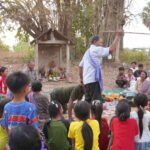
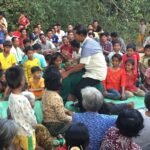
The Kech Banh Chuon (Dispatch Ritual) is not a universal component of the Leung Neak Ta ceremony, being absent in some Khmer villages (e.g., Mahor, Char Chrum, Trapeang Arak). Among Kuoy villages, the ritual is rare, with Veal Veng Village being the singular exception. The ritual is temporally and procedurally distinct: (1) Timing: It is performed early the next morning, just before sunrise, rather than concurrently with the Banhchoin Roup (medium possession). (2) Integration: It is syncretically linked with Buddhist rites, similar to the practice in Lvea Village. The offerings—a wide array of food and spices—are placed on four sangkheuk (platforms made of banana leaf sheath and woven bamboo with four carrying handles). The four sangkheuk are carried by all-male teams (7–10 men) and dispatched simultaneously to the four cardinal directions from a central village intersection (Figure 73).
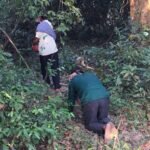
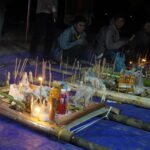
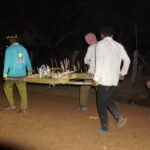
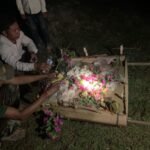
The carriers walk rapidly without looking back. Along the route, they engage in loud, intimidating behavior (shouting, striking fences) designed to frighten and drive out the lower-ranking spirits. The intention is for these malevolent entities to follow the sangkheuk out of the human domain. Upon depositing the sangkheuk at a location near the village edge—ritually designated as “outside the boundary”—the team pours liquor onto the platform before returning (Figures 74,75,76). Despite the differences in timing and technique, the core purpose of the Veal Veng ritual, like all others, remains the same: the ritual expulsion of malevolent “forest spirits” (khmaoch prei) or tiricchan from the human settlement.

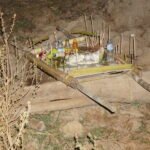
The Kech Bom Penh Khleang (Filling the Granary)
The Bom Penh Khleang (Filling the Granary) ritural is the conclusive stage of the Leung Neak Ta ceremony. The word ‘Bom Penh’ (Filling) means to make something full, complete, or abundant. The word ‘Khleang’ (Granary/Storehouse) refers to wealth or the required agricultural yield, or is likened to a rice barn. The phrase ‘Bom Penh Khleang’ is featured in the chant for supplicating the soul of the rice (pralung srov or bay srov), recorded by Lok Ta Nuon Sam, the ritual specialist (achar) of Veal Veng Village, the content of which is:
‘This is the Year of the Pig, may the rain pour abundantly, may the country be happy, let this be a sign. The thunder roars at the beginning of the year, round up the cattle and buffalo, prepare the vines, the plows, and the harrows. The time is now, our bodies are ready, our hands hold the beautiful ladies (neang): Neang Prepei, Neang Ri, Neang Rai, Neang Luot, Neang Lors, Neang Baoh Hal Phka (Rice Grain Ladies). The words we chant, the majestic cart, the divine silk, the offerings, the sticky rice. We invite the Lady to transform, to adorn the interior. We invite the Lady to sit, O all you spirit! We invite the Lady from the parrot’s nest, we invite the Lady to come and fill our granary (bom penh khleang yeung). From the caves, from the thickets, from the river estuaries, from Rompe Island, from the hanging moss, from the floating rock, from Sla Kaet Island, from the Chrouy Changvar promontory. May it be piled up like the rapeak fruit, abundant like the lavea fruit, like the parrot bringing the flower, like the monkey leading the army.’
Therefore, according to the meaning above, Bom Penh Khleang (Filling the Granary) refers to the place where rice flows in, or simply put, the ‘rice barn.’ This ritual is performed to request a full and abundant rice yield by absorbing the sacred energy from the Neak Ta, the spirit who can ensure the stability of the harvest.
In the Sambor Prei Kuk temple complex, the process of the Bom Penh Khleang ritual varies somewhat among the villages. For example, in Mahor, Chey, and Lvea Villages, the method for performing the Bom Penh Khleang ritual is almost identical. In contrast, the Bom Penh Khleang in Sambor Village has a completely different character. We will first describe the similar method of the Bom Penh Khleang ritual found in Mahor, Chei, and Lvea Villages.
The Bom Penh Khleang ritual in the three aforementioned villages begins immediately after the Dispatch Ritual is fully completed. The participants in this ritual include the medium (Ruop Snorng), attendant (Snom), ritual master (Chao Mueng), musicians, and villagers. These participants must walk around the Neak Ta shrine three times in a counter-clockwise direction, known as Uttarapavatt (walking counter-clockwise around the shrine) (Figures 77-78). The procession, which is Uttarapavatt, is led by the musicians, who are both playing and singing. The song they sing is titled ‘Bom Penh Khleang’ (Filling the Granary). The medium is still possessed by the Neak Ta (spirit); thus, the medium is both walking and dancing in this Bom Penh Khleang procession. Separately, the Chao Mueng carries a basket of paddy rice in their hand during the procession. Simultaneously, behind the shrine, next to a large tree, one or two people (male or female) are ritually designated as the ‘Me Khleang’ (Granary Master/Source). The Me Khleang has their face covered with powder and charcoal, and sometimes smokes a cigarette, while standing with their back leaning against the tree (Figures 79-80). Following this, many other men and women embrace and press their bodies against the Me Khleang from front and back, in a manner resembling ‘sexual intercourse’ or ‘copulation’ (Figure 81). This action signifies that the Me Khleang is a metaphor for the source of agricultural yield, because in Khmer belief, productivity requires passing through the act of sexual union (see Sok Chan Thida 2023). Simply put, the concept is similar to the yield originating from the Shiva Linga and Uma Yoni in Brahmanism. While the act ritually conceiving sexual union is ongoing, one or two women hold a bunch of leaves and fan the Me Khleang (Figure 82). The meaning of this fanning cannot be definitively explained, but we can hypothesize two scenarios: 1) the fanning may be intended to encourage the Me Khleang to bestow a fuller and more abundant rice harvest; 2) the fanning may be done to conceal the shame of the men and women performing the sexual act to generate the yield. The second case is similar to the Lieng Arak (Feasting the Arak) ceremony of the Cham community in Kampong Tralach District, Kampong Chhnang Province. In that Cham ceremony, a buffalo is sacrificed to the spirits. A suitable hole is dug to fit the buffalo’s neck. The buffalo’s four legs are tied down, and its neck is pushed into the hole. A knife is then used to pierce the buffalo’s neck, allowing the blood to drain into the hole. To conceal this ‘bad blood,’ a bunch of leaves is used to cover the bleeding spot.
The Bom Penh Khleang ritual described above concludes with the pouring of paddy rice seeds from the basket carried in the procession onto the tree base where the Me Khleang stood (Figures 83-84). Before pouring the rice seeds out of the basket, the following dialogue takes place:
Musician: Is it sufficient yet? (Krub rue nouv?)
Procession Attendants: It is sufficient. (Krub heuy)
Musician: What is the proof? (Ban ey chea bantol?)
Procession Attendants: The mouth (word). (Moat)
Musician: What is the certainty? (Ban ey chea prakat?)
Procession Attendants: Hooray! (Hoo………!)
In conclude, we can consider that the Me Khleang (Granary Source) is analogous to the stability of the yield, or simply put, ‘The Earth.’ The basket of paddy rice seeds that is poured out is analogous to the rice seeds that have received the sacred energy or power from the Neak Ta, which can provide an abundant yield upon that ‘Earth.’
In contrast, the Bom Penh Khleang ritual in Sambor Village is performed in front of the Neak Ta Prei Thom shrine (sometimes called Neak Ta Prei Kuk), which is located at the eastern entrance to the Northern Temple Group (Sambor Temple Group) of the Sambor Prei Kuk temple complex. It should be recalled that the Leung Neak Ta ceremony in Sambor Village takes place at two locations on the same day: the Neak Ta Tvear shrine (in the middle of the village) and the Neak Ta Prei Thom shrine. The Dispatch Ritual is performed only at Neak Ta Tvear. After the dispatch is complete, the procession walks along the ancient road towards the Neak Ta Prei Thom shrine. The Neak Ta Tvear shrine does not host the Bom Penh Khleang ritual; rather, it is performed in front of the Neak Ta Prei Thom shrine. The concept of the Bom Penh Khleang ritual in Sambor Village is entirely the same as in the villages described above—to request that the rice yield be abundant and overflowing. However, the method of the ritual is different.
The place where the Bom Penh Khleang ritual is performed is set up on a stone staircase near the north side of the Neak Ta Prei Thom shrine. This area is prepared to look like a temple gate, utilizing two small bamboo tubes placed vertically, separated by a distance of about a meter. The top of the bamboo is tied with two bunches of wild betel palm, and a hand of ripe bananas is hung above. In addition, other offerings are prepared, especially stir-fried glass noodles with turtle meat, which is an indispensable offering for the Neak Ta (Figure 85).
The Bom Penh Khleang ritual in Sambor Village begins at the very end of the overall ceremony. First, the Chao Mueng makes an offering presentation to the Neak Ta. Immediately after the offering, the “Filling the Granary” song is played, just as in Lvea and Chei Villages. The Chao Mueng and the musicians begin beating drums, dancing, and singing around the prepared site (Figure 86). They dance and sing in a counter-clockwise procession (Uttarapavatt) for three rounds. Following this, the Chao Mueng and all the attendants engage in a continuous call-and-response, and pour liquor into the two bamboo tubes until they overflow (Figure 87). Immediately after, the medium (Roup Snorng), now the village elder (chas sruk), quickly leads the attendants on foot to a designated rice field to perform the Bom Penh Khleang ritual a second time (Figure 88). Upon reaching the destination, the village elder medium stops and stands still, and an elder standing near the medium engages in a call-and-response with the Chao Mueng, who stands on the other side, close to the spot where the granary is to be filled (Figure 89). The dialogue between the Chao Mueng and the village elder attendant from the Lok Ta Prei Thom shrine is as follows:
Chao Mueng: Where are you all going, coming from, with such loud music and
instruments, and with such a large, festive, and boisterous procession? Where have you come from, and where are you going?
Attendant: We have come from very far away, Sir, we have come to ask for a place
in your country, your village, to stay, and to ask for peace and prosperity.
Chao Mueng: No! I don’t think so! Are you planning to rob or plunder people, trying to
enter my village?
Attendant: No! That is not true! Because we have come to ask for peace, to ask for
health, and to ask for goodness.
Chao Mueng: If you have come to ask for peace and health, where is your kingdom
located?
Attendant: My kingdom is very far away. It is in the Kingdom of Varanasi Srei Krup
Leak. I have brought gold as big as the base of a krak tree, and silver as big as the base of a tamarind tree. I rolled it over from yesterday, and have only just arrived today, Sir, I ask to take shelter.
Chao Mueng: If you have come to ask for peace and prosperity for my people, I will
allow you to stay, but if you have come to rob or plunder, I will not allow you to stay. Are you well?
Attendant: We are well.
Chao Mueng: If you are well, what is your name?
Attendant: My name is Ta Sok, Yey Chea (Grandfather Well, Grandmother Healthy).
Chao Mueng: I don’t think so!
Attendant: It is true!
Chao Mueng: If it is true, what is the proof?
Attendant: The mouth (word).
Chao Mueng: What is the certainty?
Attendant: Hooray! (Hoo.!)
After the entire dialogue is completed, two men carrying liquor, who are standing near the designated spot, pour all the liquor into the hole that was marked for the second Bom Penh Khleang ritual (Figures 90-91). The Bom Penh Khleang ritual is then completely finished, and the medium (Roup Snorng), acting as the village elder, continues on foot back towards the village home. In this scene of the Bom Penh Khleang, liquor is used to perform the ritual, unlike the three villages described above where paddy rice seeds were used. Liquor is considered a vehicle that can connect humans with the deities, or allow humans to speak with the deity, which is the Neak Ta. Therefore, the Bom Penh Khleang performed by pouring liquor into the bamboo tubes and pouring liquor into the hole in the rice field on both occasions, is an opportunity for humans to convey their concerns and ask the Neak Ta to fulfill their requests. Furthermore, both the bamboo tubes and the hole in the rice field are symbols of the Earth, which is the soil capable of producing a rice yield. The liquor, in turn, is a symbol of the rainwater that falls to irrigate that rice field. Consequently, the intention of the people performing this ritual is inevitably to request abundant and overflowing rainfall and to ensure a rich and prosperous rice harvest in the following year.
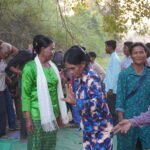
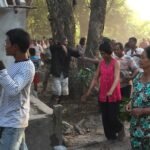
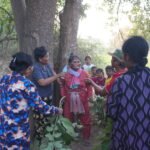
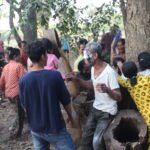
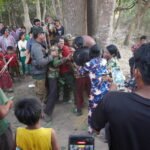
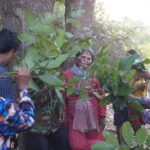
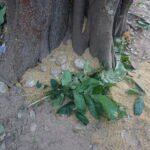
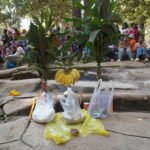
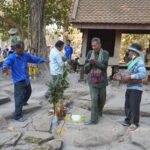
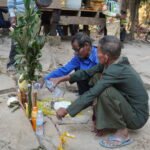
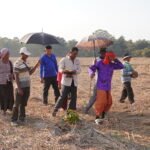
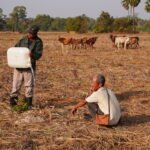
The Kech Danghae Praloeng Srov (Procession of the Rice Soul) Among the Kuoy
The Kuoy ethnic group distinguishes itself from the Khmer by omitting the Bom Penh Khleang (Filling the Granary) rite, substituting it with the Procession of the Rice Soul (Kech Danghae Praloeng Srov) or (Danghae Bay Srov). This ritual is integral to the Leung Neak Ta ceremony in all four surveyed Kuoy villages. While the ritual is common to the Kuoy villages, the degree of traditional adherence varies. In Ta Laek Thmei, Veal Veng, and Andas Villages, few participants bring the physical representation of the praloeng srov (rice soul). This suggests a ritual shift, bringing their practice closer to the Khmer model, where the pralung srov is typically absent in the Leung Neak Ta ceremony (with the exception of the Royal Ploughing Ceremony in Sambor). In Koun Kaek Village demonstrates a much stronger retention of the original Kuoy custom, with a high participation rate of villagers carrying the praloeng srov.
It should be reiterated that the Rice Soul (Praloeng Srov or Bay Srov) is an object made of puffed rice (leach srov), skewered onto a coconut frond, and bent into a drooping, curved shape, resembling a rice stalk bowing under the weight of its grain. This puffed rice is then tied together with blue-colored leaves, such as ansae, sermoan, trasek, or traset grass, among others. This object is considered the symbolic representation of the ‘Rice Soul,’ which refers to energy, power, or authority. The purpose of bringing the Rice Soul to the ceremony is to allow this representative object to absorb the energy from the Neak Ta, as the Neak Ta‘s power will be transferred to the rice seeds during the ritual at the shrine. This is why, in Veal Veng Village, the Rice Soul is tied directly to the wall of the Neak Ta‘s shrine. The intention of the participants is to request that the rice seed possess abundant energy, allowing for a plentiful harvest in the new planting season. This is because the primary concern of the people is ‘rice,’ which is the indispensable traditional food.
The Kuoy ritual of the Danghae Praloeng Srov (Procession of the Rice Soul) is functionally analogous to the Khmer Bom Penh Khleang (Filling the Granary) rite, sharing the identical goal of securing an overflowing agricultural yield. In Koun Kaek Village, participation is inclusive, without restriction by age or gender, though children are frequently the carriers of the Praloeng Srov (Figure 92). The procession enacts a three-round, counter-clockwise walk (Uttarapavatt) around the Neak Ta shrine. The procession is led by male Chao Mueng. One carries a tray containing various seeds (rice, sesame, beans, potatoes), symbolizing the desired full yield, while another carry offering cakes (Num Neali and Num Ansorm Ph’av). Ritual Action: as the group walks, the leading Chao Mueng scatters the seeds, which are meant to absorb the Neak Ta‘s power and “sprout abundantly” in the following season (Figure 93). The participants dance, sing, and cheer, creating a joyful, celebratory atmosphere. A third Chao Mueng stands at the shrine entrance to engage in a formalized, three-part, rhetorical dialogue with the procession after each round (Figure 94):
Chao Mueng: Where are you all going? (Ter aos lok anhceunh tov na tov ney?)
Procession Attendant: We have come to perform the Leung Neak Ta ceremony to request
peace (sok) and prosperity (chamroeun), and to ask for a full and abundant rice harvest (srov aoy penh boribour).
Chao Mueng: Is it victorious? (Chey horng?)
Procession Attendant: Victorious. (Chey)
Chao Mueng: Is it peaceful? (Sok horng?)
Procession Attendant: Peaceful. (Sok)
Chao Mueng: If it is peaceful, what is the proof? (Bae sok ban aey chea bantol?)
Procession Attendant: The mouth (word). (Moat)
Chao Mueng: What is the certainty? (Ban ey chea prakat?)
Procession Attendant: Hooray! (Hoo…!)
In contrast, in Veal Veng, Andas, and Ta Laek Thmei Villages, the Rice Soul Procession walks to the right in a clockwise manner (Prataksina), which is opposite to Koun Kaek Village, which walks to the left in a counter-clockwise manner (Uttarapavatt). Furthermore, this procession is led by the medium (Roup Snorng) dancing directly at the front, and there is no scattering of seeds or ritual dialogue like in Koun Kaek Village (Figures 95).
The completion of the Rice Soul Procession marks the conclusion of the entire Leung Neak Ta ceremony. The focus then shifts to integrating the newly consecrated Praloeng Srov (or Bay Srov) into the domestic and agricultural spheres. Participants take their Praloeng Srov back to their homes and place them strategically to transfer the Neak Ta‘s power into their household and harvest stores:
The Central Pillar (Preah Tul): A common practice is to insert the Praloeng Srov into the joint (chrorm) of the main central house pillar (sasor kanlaong). This joint is ritually known as ‘Preah Tul’ (Supporting Deity), signifying the deity who protects and sustains the dwelling (Figures 96-97).
The Granary: Other common placement points include: inserting them between the rice storage baskets (daok srov), tying them to the granary’s pillars, or, in some cases, first heaping up the rice in the baskets to signify overflowing abundance before insertion (Figure 98).
The purpose of this placement is to ensure that the rice seed, now charged with the energy and power of the Neak Ta, will yield peace, prosperity, and an overflowing harvest in the subsequent year. The Praloeng Srov inserted into the Preah Tul is customarily kept in place for the entire year, being replaced only during the next annual Leung Neak Ta ceremony.

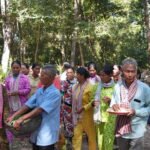
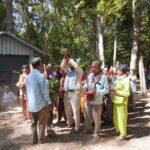
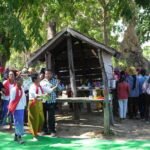
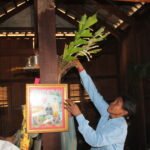

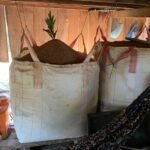
Bibliography
ម៉ៅ សិទ្ធិប៊ុណាវឌ្ឍន៍
២០១៥, ការកំណត់ និងប្រើប្រាស់លំហ, សារណាបញ្ចប់បរិញ្ញាបត្របុរាណវិទ្យា ជំនាន់ទី២៣ សាកលវិទ្យាល័យភូមិន្ទវិចិត្រសិល្បៈ, ភ្នំពេញ។
លី ធាមតេង
១៩៧៣, កំណត់ហេតុរបស់ ជីវ តាក្វាន់ អំពីប្រពៃណីនៃអ្នកស្រុកចេនឡា, ភ្នំពេញ។
សុខ ច័ន្ទធីតា
២០១៣, គំនិត និងកិច្ចពិធីទាក់ទងនឹងភោគផល, សារណាបញ្ចប់បរិញ្ញាបត្របុរាណវិទ្យា
ជំនាន់ទី២១ សាកលវិទ្យាល័យភូមិន្ទវិចិត្រសិល្បៈ, ភ្នំពេញ។
ស្រី សមប៊ុនណារ៉ុង
២០២៥, ៩កើត មាឃធំ, ផ្សាយអនឡាញដោយ AMS Khmer Civilization តាមរយៈតំណ
ភ្ជាប់ https://khmercivilization.ams.com.kh/detail/31543
២០២៥, រាអណ្តើក, ផ្សាយអនឡាញដោយ AMS Khmer Civilization តាមរយៈតំណភ្ជាប់
https://khmercivilization.ams.com.kh/detail/31472
២០២៥, ឡើងអ្នកតាភូមិកូនក្អែក, ផ្សាយអនឡាញដោយ AMS Khmer Civilization តាមរយៈ
តំណភ្ជាប់ https://khmercivilization.ams.com.kh/detail/31356
អាំង ជូលាន
២០០០, មនុស្ស និងដី, រៃយំ, ភ្នំពេញ។
២០០៥-២០០៦, “គ្រូកំណើត”, បណ្តាញពត៌មានក្នុងវប្បធម៌ខ្មែរ, ១: ៤៣-៤៤។
២០០៨-២០០៩, “នំនាល”, បណ្តាញពត៌មានក្នុងវប្បធម៌ខ្មែរ, ៤: ២៣-២៤។
២០១២-២០១៣, “៣កើតមាឃធំ”, បណ្តាញពត៌មានក្នុងវប្បធម៌ខ្មែរ, ៨: ៤៣-៤៤។
២០១២-២០១៣, “មាន់ឆ្កាង”, បណ្តាញពត៌មានក្នុងវប្បធម៌ខ្មែរ, ៨: ៣២-៣៦។
២០២០, អាហារនៅជនបទអង្គរ, យសោធរ, ភ្នំពេញ។
ឯក កល្យា
២០០៣, ជំនឿអណ្តើកក្នុងសង្គមខ្មែរ, សារណាបញ្ចប់បរិញ្ញាបត្របុរាណវិទ្យា ជំនាន់ទី១០ សាកលវិទ្យាល័យភូមិន្ទវិចិត្រសិល្បៈ, ភ្នំពេញ។
Ang Chouléan
- Les être surnaturels dans la religion Populaire khmère, Centre de Documentation et
de Recherche sur la Civilisation Khmère, Paris.
- ‘Brining India to Cambodia: two examples of bridges’, India and Southeast Asia: cultural discourses, pp. 72 – 82, edited by Anna L. Dallapiccola and Anila Verghese.
Coedès, G.
- ‘Quelque précisions sur la fin du Fou-Nan’, BEFEO, Tome 43, Paris.
Maspero, E. P.
- Etudes sur les rites agraires des Cambodge, Paris-La Haye, Mouton & Co, t 1, p.1-
Mus, P.
- ‘India see from the east: Indian and indigenous cults in Champa’, translated from the French by I.W. Mabbett, edited by I.W. Mabbette and D.P. Chandler, Originally published as ‘Cultres indiens et indigenes au Champa’, BEFEO, Vol XXXIII, 1933, pp. 367-410, and reprinted as L’Inde Vu de l’Est: Cultes indiens et indigenes au Champa (Hanoi, 1934): Monash papers on Southeast Asia – No. 3, Centre of Southeast Aisan studies, Monash university.
Rinpoche, T.
- The three vehicles of Buddhist practice, Namo Buddha Publications.
Saveros, P. & Ang Chouléan
1987-90. “Vocabulaire Khmer relatif au surnaturel”, Seksa Khmer.10-13, Paris:
CEDORECK, p.59-129.
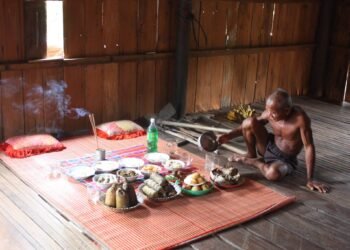
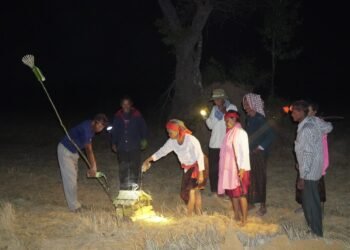
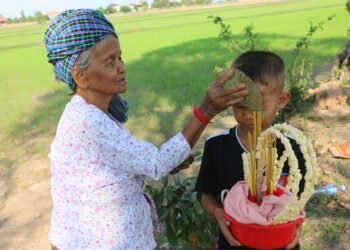
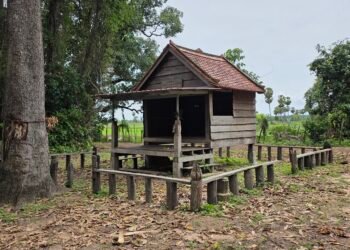
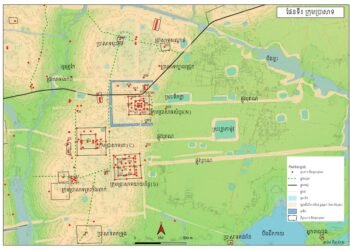
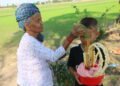
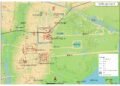
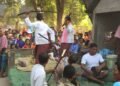
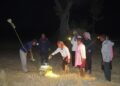
Discussion about this post